 Ting Chen
Quick Navigation
Let's be real—finding a public toilet in China can be stressful. I've watched tourists panic, desperately circling blocks, clutching their stomachs. Don't be that person.
The biggest shock? Many public toilets in China require you to bring your own toilet paper. And international credit cards? Useless for coin-operated stalls. You need a game plan.
Here's the golden rule: Target large shopping malls, Starbucks, or high-end hotels. They have Western-style toilets, free paper, and English-friendly cleaning staff. Now, let's break down everything else.
Why the Hunt Is Hard
China's public toilet culture is different. You won't find public restrooms on every corner like in Europe or the US. Even when you do, they might be squat toilets (which take getting used to). Add language barriers and payment confusion, and it's a recipe for disaster if you're unprepared.
The rise of mobile payments means many free toilets now require scanning a QR code to get paper or to unlock the door—but if you're using a foreign Alipay or WeChat, it works fine. Just make sure you have data and a VPN.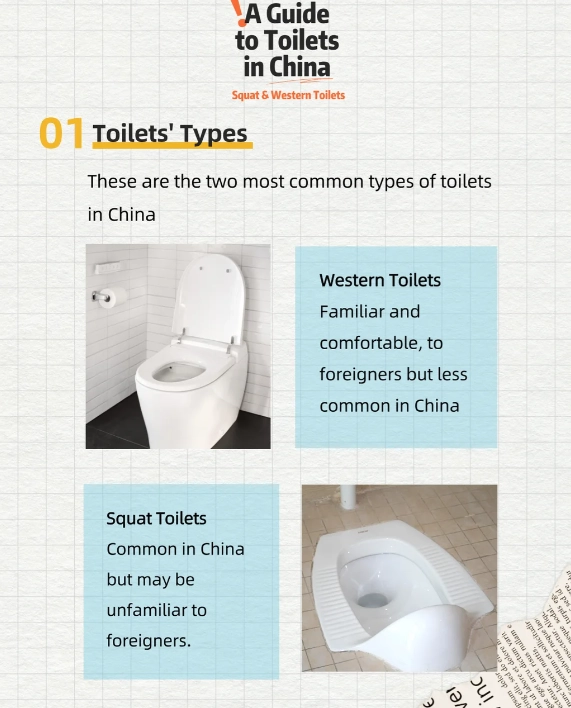
Where to Go: The Best Public Toilets in China
Not all toilets are created equal. Here's a breakdown of what to expect:
| Location | Cleanliness | Free? | Toilet Paper | Cash Accepted | Recommendation |
|---|---|---|---|---|---|
| Large Shopping Malls (e.g., Wanda, Joy City) | Excellent | Yes | Usually yes | No (free) | Best bet in any city |
| Starbucks / McDonald's / KFC | Good | Yes | Sometimes (ask cashier) | N/A | Reliable and air-conditioned |
| High-end Hotels (e.g., Marriott, Shangri-La) | Excellent | Yes (public areas) | Always | No | Use the lobby restroom – no one will stop you |
| Scenic Spots / Parks | Fair to poor | Usually free | Rarely | No | Bring your own paper and disinfectant wipes |
| Subway Stations | Good (new lines) / Fair (older lines) | Yes | No (some have vending machines) | QR code only | Cleaner in newer cities like Chengdu or Shenzhen |
| Roadside Public Toilets | Poor | Free or 1 yuan | Never | Sometimes coins | Avoid if possible – squat only and often no door |
What to Bring: The Toilet Survival Kit
Never leave your hotel without these items:
- Toilet paper (a whole roll) – public stalls rarely have any.
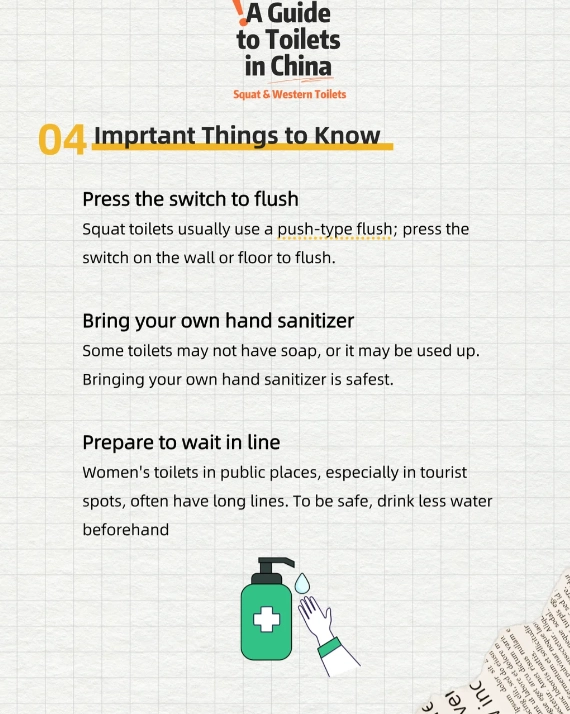
- Hand sanitizer or disinfectant wipes – soap is a luxury in many public toilets.
- Small change (1, 5, 10 yuan coins and notes) – for paid toilets or vending machines.
- A plastic bag – for wrapping used paper if the bin is overflowing (which happens often).
- A spare face mask – strong odors are common; a mask saves your nose.
I always carry a small pouch with these, and it's saved me countless times. Once, in a remote village, the only toilet was a hole in the ground with no door—my wipes and mask were heroes.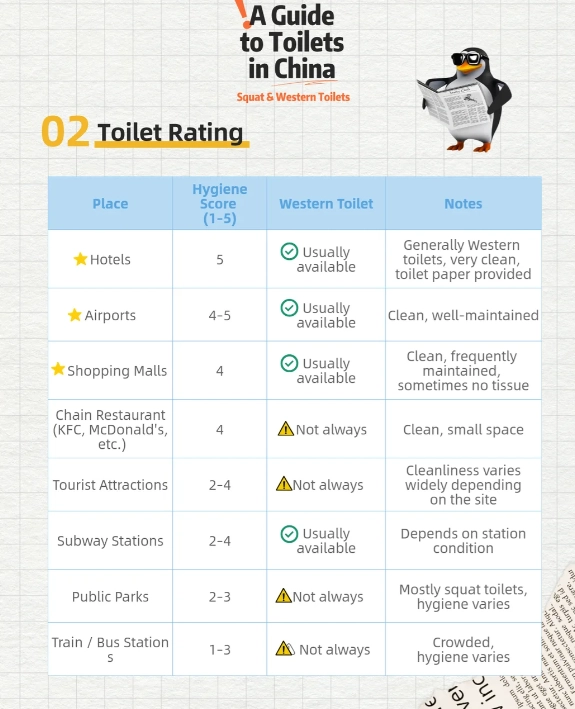
Payment Methods & Etiquette
Most free toilets don't require payment. But some roadside or tourist-heavy toilets charge 1–3 yuan. They usually accept:
- Cash (coins preferred) – the safest option for foreigners.
- QR codes via Alipay/WeChat – works if you have a Chinese bank account or an international card linked (many tourists do).
Etiquette tips:
- Don't flush toilet paper down the toilet – in most Chinese plumbing systems, the pipes are narrow and will clog. Use the bin provided.
- Line up if there's a queue – cutting is a big no-no.
- If you use a squat toilet, face the hood (the sloping part) – trust me, you'll avoid splashes.
Emergency Plans & Plan B
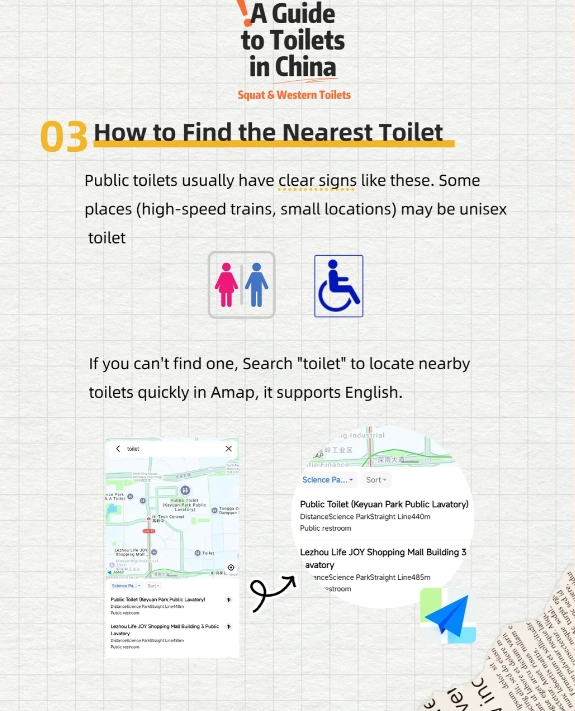
What if you're stuck in a historical area with no malls in sight? Here's my go-to strategy:
- Head to the nearest hotel – walk in like you're a guest. Usually the lobby restroom is accessible.
- Try a museum or gallery – they almost always have clean, free toilets, even if you're not visiting the exhibit. Just act confident.
- Ask a local for help – say "cèsuǒ zài nǎ lǐ?" (Where is the toilet?). Many people will point you to their own home if you're desperate – rural hospitality is real.
I've had to resort to asking a noodle shop owner to use their staff toilet. They kindly obliged when I bought a bottle of water. Small purchases are a polite way to earn access.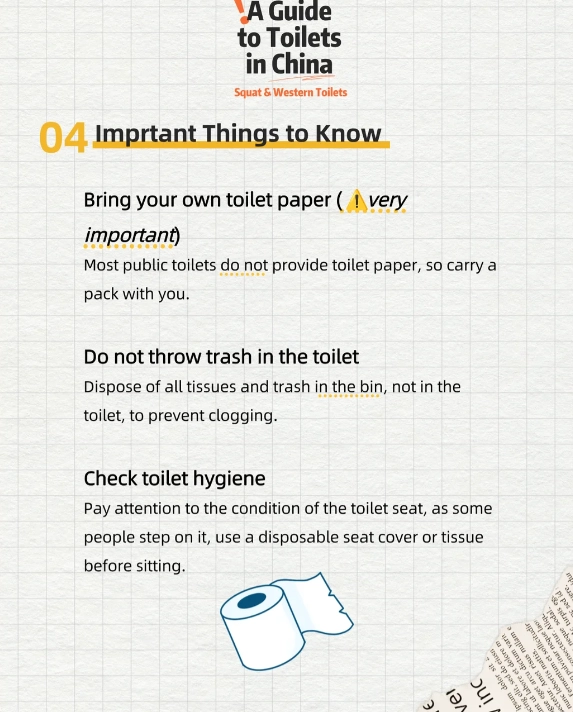
Frequently Asked Questions
 What if I cannot scan a QR code to pay for a toilet?







Can't recommend this enough! I was in Beijing for two weeks and never once had a bad bathroom experience thanks to these tips. Especially loved the advice about using high-end hotels and museums. The one at the National Museum was cleaner than most in my home country. This article should be mandatory reading for all tourists.
Absolutely essential reading for anyone traveling in China. The section on squat vs. Western toilets and how to handle the squat ones (with photos!) was super helpful. I also loved the reminder to check for squat toilets before committing—saved me from a few awkward moments. Five stars, no notes.
This article is a lifesaver! I was dreading public toilets in China, but after reading this I felt prepared. Used the suggested WeChat mini-program to find clean ones and it worked like magic. The toilets at the train station in Hangzhou were spotless, with proper flush and toilet paper. Seriously, follow every tip here and you'll be fine!
Pretty solid guide overall. The advice about carrying your own toilet paper and hand sanitizer is spot on—saved me multiple times. Only complaint is that some of the 'recommended' spots listed in the article were already closed or under renovation when I tried them. But the general tips are useful, so I'd give it a 4.
I read this article before my trip to Chengdu and was hopeful about finding clean restrooms. Followed the tip about using malls and Starbucks, but the one we found still had no soap and smelled pretty bad. Maybe I had bad luck, but the article oversold it a bit. Still, better than nothing.
Honestly a bit let down. I followed the article's suggestion to go to a department store restroom in downtown Guangzhou. It looked okay at first, but there was a weird sour smell, the floor was wet, and the soap dispenser was empty. Felt rushed and uncomfortable. Maybe I caught it at a bad time, but my first impression wasn't great. 3 stars—could be better.
Decent guide overall, but my experience was a bit mixed. I tried the tip about using high-speed rail station toilets. The one in Hangzhou East was pretty clean, but the queue was at least 15 minutes long, and the paper dispenser ran out quickly. It's still way better than some random street toilets, just not perfect. 4 stars—useful but manage your expectations.
As a budget backpacker hopping between hostels, I rely on public restrooms a lot. The tips in this article—especially checking fast-food chains and metro stations—worked perfectly in Chengdu. Found a super clean one at the Wuhou Shrine metro exit, with warm water for washing hands. That's a luxury I didn't expect! Will definitely keep this guide saved.
This article literally saved my solo trip to Xi'an. I followed the advice to look for toilets near major tourist spots that have a dedicated cleaner. The one near the Bell Tower had a friendly auntie mopping constantly, and there was a faint lavender scent. No odor, no mess. I felt so relieved! 5/5 for making a nervous traveler feel safe.
Absolutely loved this guide! I was in Shanghai last week and used the tip about looking for high-end malls or subway station restrooms. Found one in a new shopping center—spotless floors, automatic toilets, and even a little spray sanitizer. The free toilet paper was a game changer after a long day of walking. Highly recommend this article if you're nervous about public toilets in China!