 Chen Liu
What You'll Learn Here
You've seen the photos—those iconic twin shells glowing against the South China Sea. But getting that shot? It's trickier than you think. I've lost count of how many tourists I've seen show up at noon, squinting into the sun, or walk away frustrated because they couldn't find the spot. Here's the truth: the perfect Zhuhai Opera House photography spot isn't on the brochures. It's around the corner, literally. After leading groups for years, I can tell you that the magic happens when you ditch the main plaza and head to the east side around 4 p.m. — no crowds, no harsh shadows, just those beautiful shells and the sea.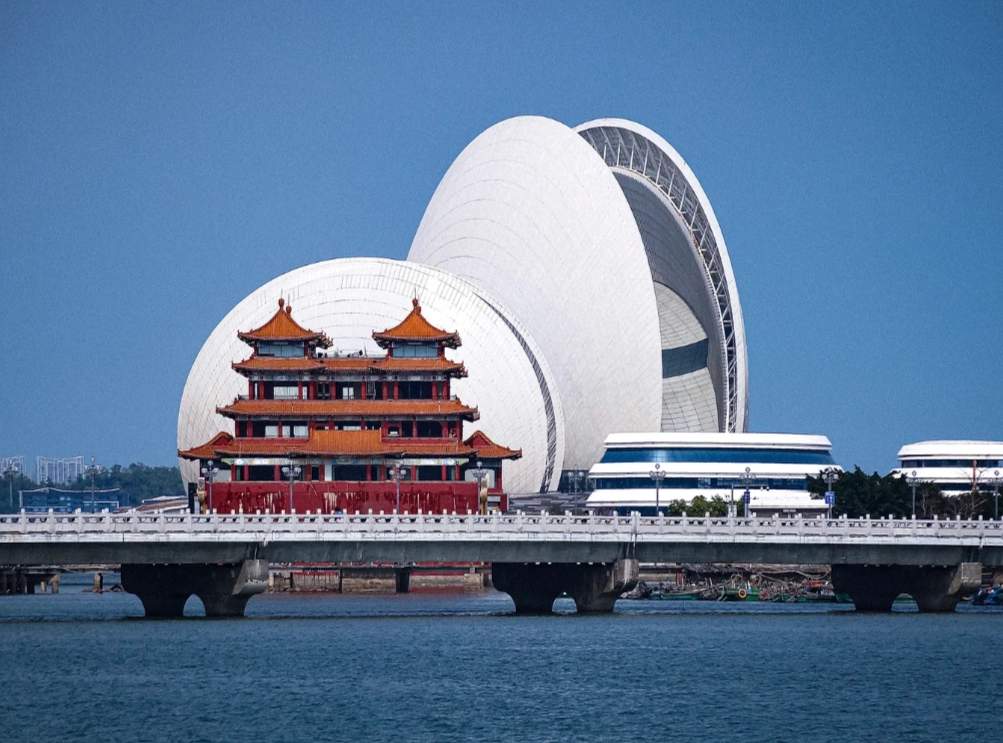
Why Most Photos of Zhuhai Opera House Disappoint (and How to Fix It)
Most visitors make the same mistake: they stand right under the opera house and shoot upward. You get a massive white building with no context, flat lighting, and a dozen other tourists photobombing you. The problem is twofold: bad angle and wrong timing. The opera house sits on Yeli Island, and its best silhouette appears when you shoot from a distance, using the sea or sky as a backdrop. Also, the facade faces south-southeast, meaning direct sunlight hits it hard from 10 a.m. to 2 p.m., washing out the details and creating unflattering contrast in photos.
My fix: Shoot from spots at least 200 meters away, and only during the golden hours (shortly after sunrise or before sunset). During midday, the white shells turn into a giant reflector that's impossible to expose correctly. I always tell my groups: if you arrive between 11 a.m. and 3 p.m., go grab a coffee first. Trust me, your camera will thank you.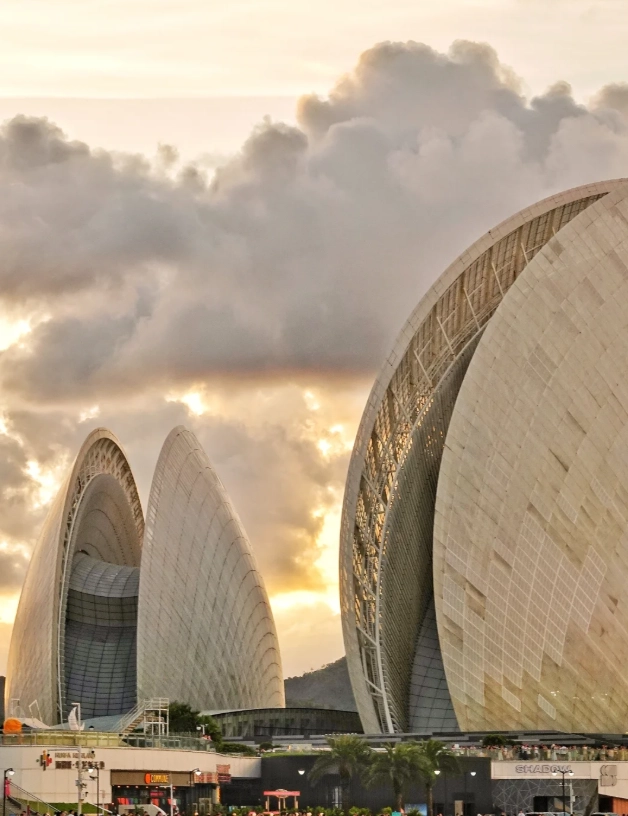
The 3 Best Photography Spots Around Zhuhai Opera House
I've scoured every corner of this island. These three spots consistently produce the best results for different styles — from wide landscapes to intimate details.
| Spot | Distance from Opera House | Best Time | Best For |
|---|---|---|---|
| Eastern Boardwalk | ~300m | 4:00–5:30 p.m. | Wide shots with sea + silhouettes |
| Southwest Seawall | ~150m | Sunrise (6:00–7:00 a.m.) | Reflections in calm water |
| Bridge Approach (Lovers Road) | ~500m | After sunset (blue hour) | City skyline + opera house in one frame |
1. Eastern Boardwalk (The Golden Spot)
This is my absolute favorite. Walk to the eastern side of Yeli Island, where a wooden boardwalk stretches along the coast. You'll be looking west, so the opera house is lit from behind by the afternoon sun. The water in the foreground catches the warm light, and you can frame the opera house between the boardwalk curves. Bring a wide-angle lens (16–24mm) to capture the full scene. To get there, take Didi to "Yeli Island South Gate" (野狸岛南门) and walk right along the path for about 10 minutes. The boardwalk is easy to miss — look for a small staircase leading down near the public restrooms.
2. Southwest Seawall (Reflections at Sunrise)
If you're an early riser, head to the southwest side of the island. Here, a low seawall creates a natural foreground and, on calm mornings, you get a mirror-like reflection of the opera house in the water. Use a polarizing filter to cut glare and saturate the sky. This spot is also less crowded than the boardwalk — I've had entire mornings to myself. Arrive at least 30 minutes before official sunrise to set up your tripod. The address for your taxi: "Yeli Island Southwest Parking" (野狸岛西南停车场).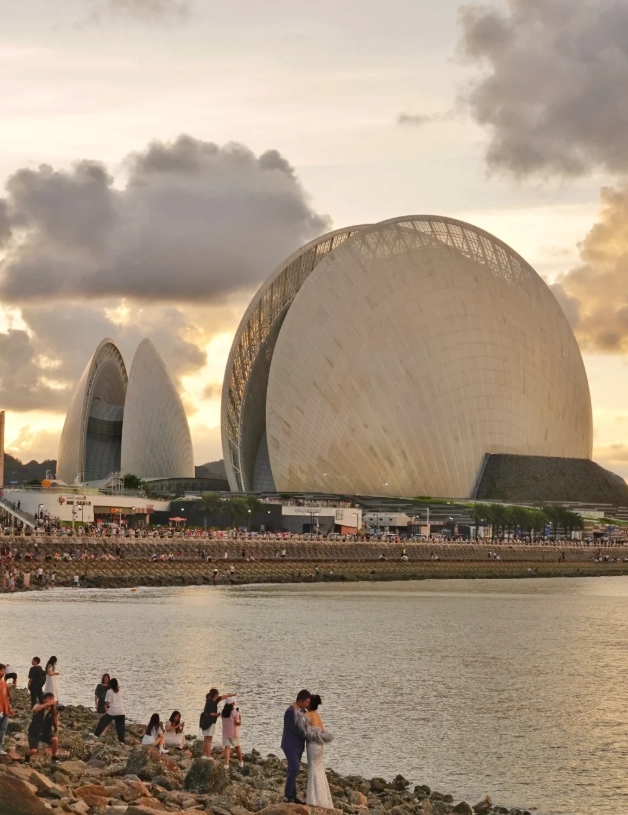
3. Bridge Approach from Lovers Road (Blue Hour Magic)
After sunset, the real show begins. Walk to the pedestrian bridge connecting Yeli Island to Lovers Road (情侣路). This elevated spot gives you a stunning perspective: the opera house sits to the right, while the Zhuhai city skyline glitters behind it. Shoot during nautical twilight (about 15–30 minutes after sunset) for deep blue tones. A tripod is essential here — you'll need 2–4 second exposures. The bridge address: "Lovers Road Yeli Bridge" (情侣路野狸桥).
When to Shoot: Golden Hours vs. Blue Hours
Timing is everything. Let me break it down:
- Golden Hour (Sunrise & Sunset): For Zhuhai Opera House, sunset is slightly better because the warm light illuminates the shells from behind (if you're on the boardwalk). Sunrise works too, but you'll be shooting against the light from most angles — that's why I recommend the southwest side for reflections.
- Blue Hour (Before sunrise & after sunset): After sunset, the sky turns deep blue, and the opera house lights turn on. This is when the building really pops. The bridge approach is king here.
- Night: Avoid it unless you have a very fast lens and are going for abstract long exposures. The building's lights are white and harsh, not particularly attractive on their own.
Pro tip: Check the weather. A partly cloudy sunset gives dramatic skies. Completely overcast? Skip the golden hour and go for blue hour — the clouds won't matter as much.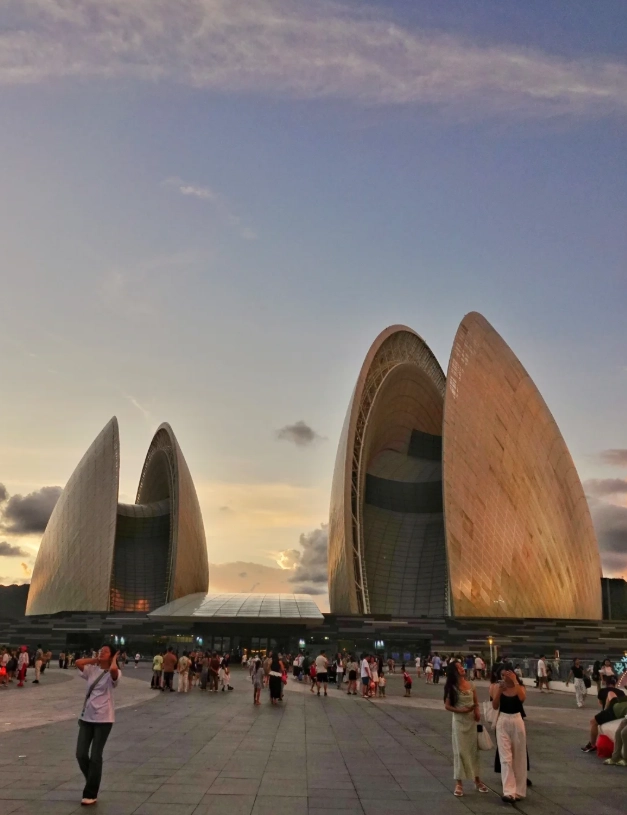
Practical Tips for Foreign Travelers: Payment, Navigation & Language
Let's be real: visiting China's attractions comes with hurdles. Here's how to handle them like a pro.
Payment: Cash? Forget It
Almost no vendors on Yeli Island accept cash or international credit cards. You need Alipay or WeChat Pay — even for a bottle of water. Before you go, link your foreign Visa or Mastercard to Alipay (it's easier than ever since 2023). At the opera house itself, the ticket office for indoor performances accepts digital payments only. For outdoor photography, entrance is free, so you don't need to pay, but nearby food stalls and toilets (收费, 1 yuan) require digital payment.
Navigation: Ditch Google Maps
Google Maps is unreliable in China. Use Apple Maps (works surprisingly well) or download AMap (高德地图) Global version beforehand. For taxis or Didi, show the driver the Chinese addresses I provided above. Didi itself is a Chinese app — set it up with your foreign phone number; it works with Alipay. If you can't install it, ask your hotel to call a taxi. But honestly, Didi is your best friend here.
VPN & Translation
Don't even try to access Instagram, Facebook, or Google without a VPN. Install a reliable one (like ExpressVPN or NordVPN) before you land. Use Apple Translate or Baidu Translate for menus or signs — many local food shops near the opera house don't have English menus.
Booking the Indoor Performance (Optional)
If you want to photograph the interior (not allowed during shows but sometimes open for tours), you need to reserve tickets via Trip.com or Klook. Walk-ins are almost never allowed. Use your passport for real-name registration. The box office accepts only Chinese ID or passport — no copies.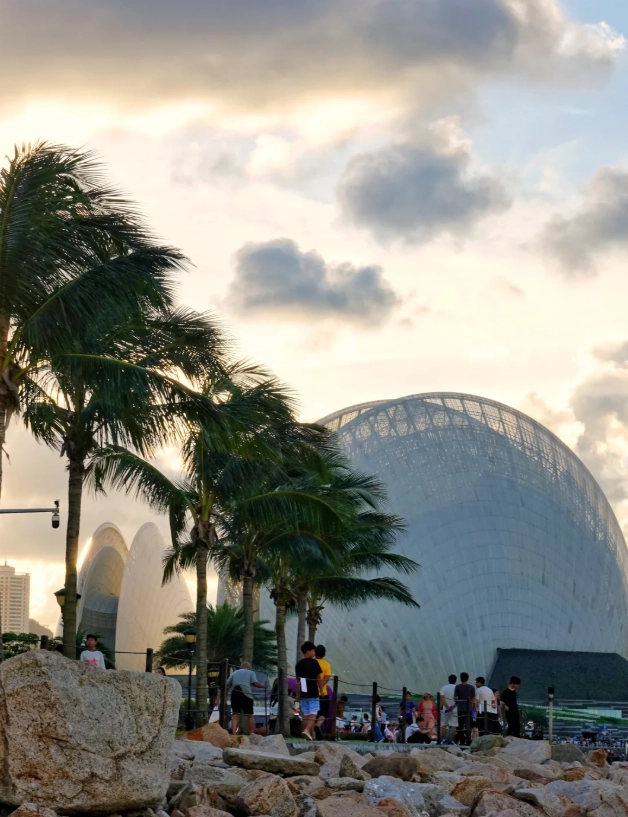
What to Bring: Camera Gear and Essentials
- Wide-angle lens (16-24mm) – for the boardwalk and bridge shots.
- Telephoto lens (70-200mm) – to compress the opera house against the skyline from the bridge.
- Polarizing filter – essential for reducing reflections on the water.
- Neutral density (ND) filter – optional, if you want silky water effects during golden hour at the boardwalk.
- Sturdy tripod – for blue hour and night shots. The bridge can be windy, so a weight hook helps.
- Extra batteries and memory cards – you'll shoot a lot.
- Power bank – your phone for maps and payments will drain fast.
Insider advice: The boardwalk has no shade. Bring a hat and sunscreen even in winter. And please, wear comfortable shoes — those 10 minutes to the boardwalk can feel like 30 when you're carrying gear.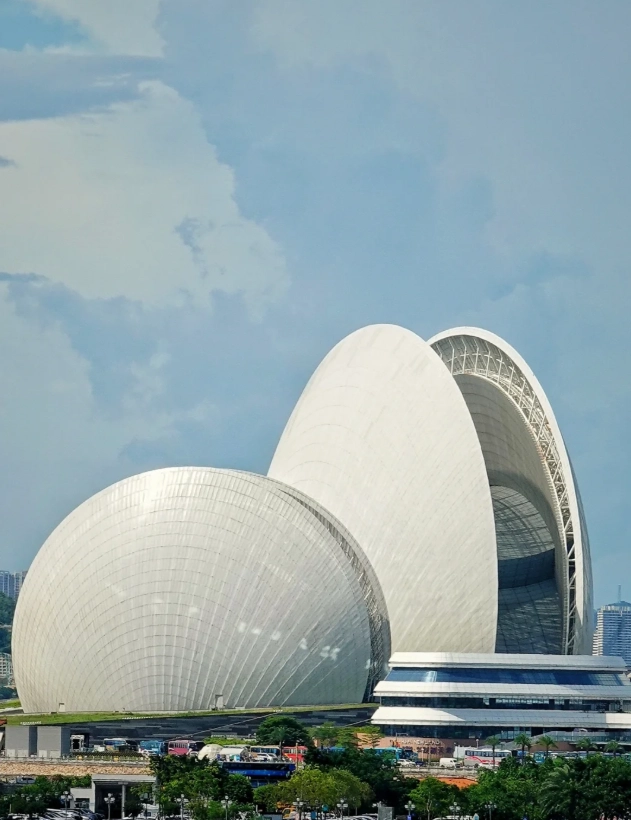
Frequently Asked Questions about Zhuhai Opera House Photography
Verified and fact-checked by the editorial team.
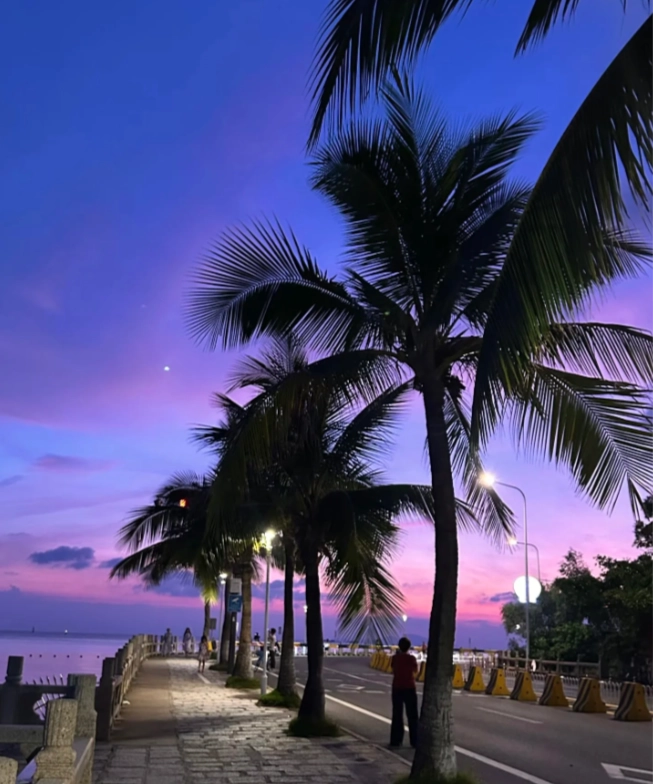
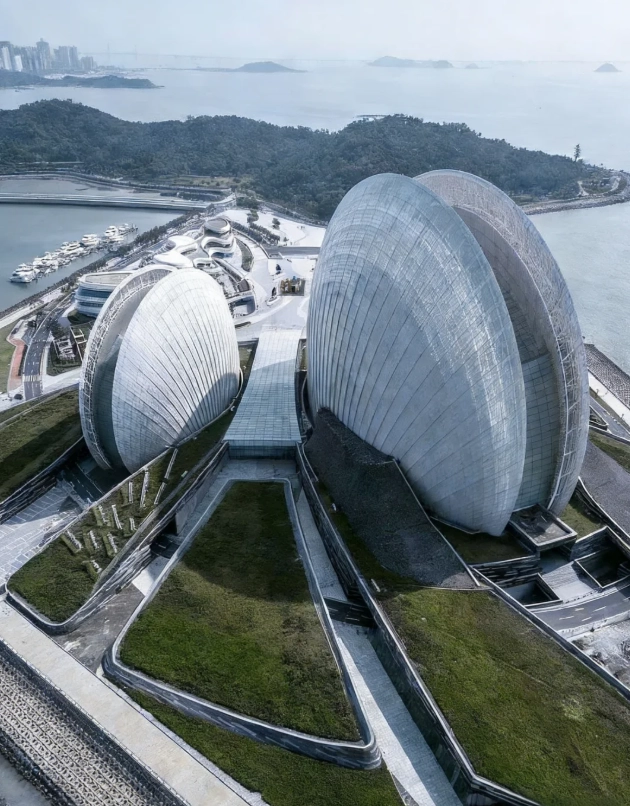
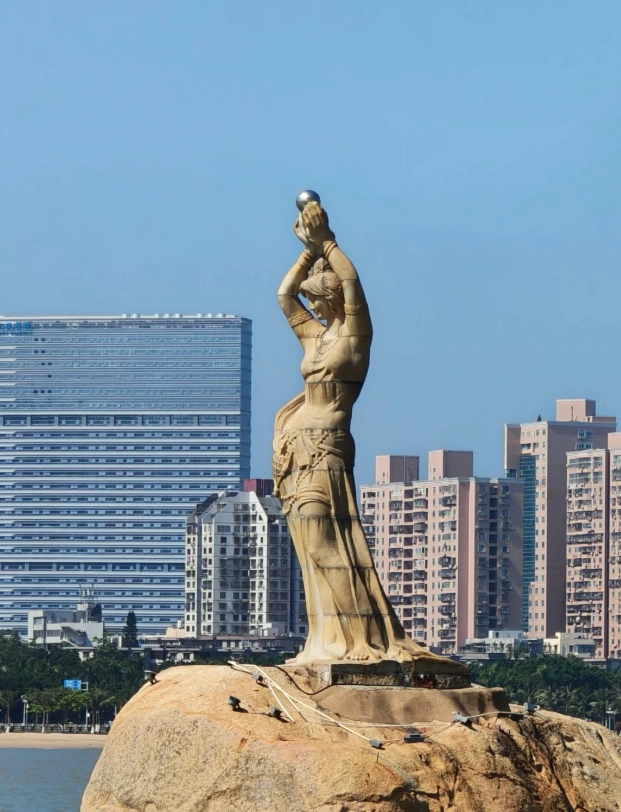
I went on a foggy morning and got the most ethereal moody shots of the Zhuhai Opera House. The mist softened the edges of the shells and gave everything a dreamlike quality – totally different from the usual crisp sunset photos. I had the entire waterfront nearly to myself at 7am. The only challenge was the damp air fogging my lens, but I just wiped it down between shots. Pro tip: use a longer focal length (around 85mm) to compress the perspective and make the two shells look closer together. This was honestly my favorite photography experience in China so far.
This is THE place for sunset silhouette shots. I arrived at 5:30 and scoped out the spot near the coffee shop on the second floor of the mall across the street. From that elevated angle you get both shells perfectly framed against the sunset sky. The lighting inside the opera house started to glow around 7pm, so I switched to a 70-200mm for those compressed city-light shots. Only downside: the glass in the mall window created some reflections, but a lens hood solved it. If you're serious about night photography, stay until 8:30 when the building is fully lit – it's breathtaking.
Absolute gem for photographers! I followed a tip to shoot from the small pier on the east side around 6pm, and the light hitting the white shells was pure magic. No crowds there at all – most people stick to the main plaza. I used a polarizer to cut glare and got crystal-clear reflections in the calm water. The opera house changes color during twilight – first warm gold, then cool blue. If you bring a tripod you can capture both phases in one long exposure. Hands down the best architectural photo I've taken all year. 11/10 recommend!
Decent spot if you plan ahead. I went at golden hour and got some nice reflections off the water, but the tide was low so the beach area looked muddy. The 'secret path' that some blogs mention is actually just a muddy trail to the right of the main plaza – not terribly photogenic. The building itself is gorgeous, and with a 24mm lens I managed to capture the full shell shape. Would be a solid 5 if the city cleaned up the construction debris near the waterfront. Worth a visit, but temper your expectations.
I really wanted to love this spot for photos, but honestly it was a letdown. The opera house itself is stunning, but the main photography area was absolutely packed with tourists even on a weekday afternoon. I could barely find a clean angle without people photobombing every shot. Also, the sun was directly behind the building at 4pm so the silhouette was blown out unless you had a really good ND filter. If you're not willing to wait until after 6:30pm, don't bother. Overrated for the hype.