 Yan Zhou
Quick Glance
I've walked Zhongshan Road more times than I can count. And every time I bring a new group of travelers, I see the same look of awe when they first spot the row of elegant qilou (骑楼) buildings stretching toward the sea. But here's the thing—most people miss half the story. They snap a selfie in front of the biggest arch and move on. That's a shame, because this 1.2-kilometer pedestrian street is basically an open-air museum of early 20th-century architecture, blending neoclassical, art deco, and southern Fujian elements. After years of leading tours, I've figured out the exact route that shows you the best facades, the quietest corners, and the fewest crowds. Let me save you from the typical tourist traps and show you how to really see this street.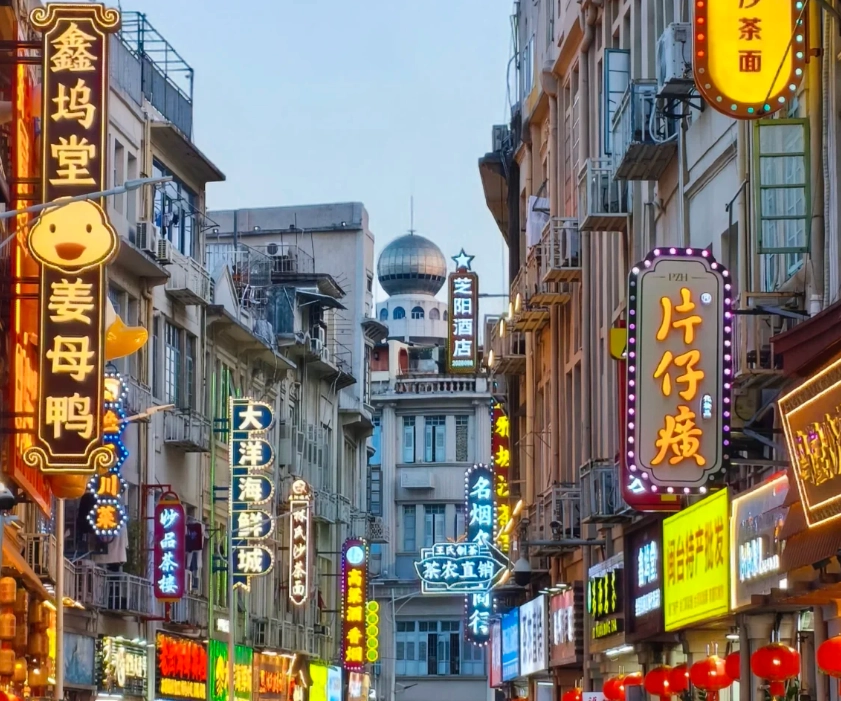
Why Walk Zhongshan Road?
Zhongshan Road isn't just a shopping street. It's the historical spine of Xiamen's old city, built in the 1920s when the city was a treaty port. The architecture reflects that era: the ground floor arcades (qilou) protect shoppers from rain and sun—a practical design from Southeast Asia. Above, you'll see ornate plasterwork, European-style columns, and Chinese motifs mixed together. This is the only place in China where you can see such a dense concentration of preserved qilou from the Republican period. Every building has a story—some were banks, some were trading firms, others were cinemas. I always tell my guests, "Look up, not at the shop signs." Because the real treasures are above eye level.
Architecture Highlights Along the Route
Typical Qilou Features
The standard qilou on Zhongshan Road has a ground-floor arcade about 4 meters wide, supported by pillars. Above, two to three stories with wide verandas, often enclosed with decorative iron railings. The roofs are flat or have a slight pitch, but the really fancy ones have parapet walls with geometric patterns. Colors are mostly creamy white, pale yellow, or light green—originally lime plaster. I love how the morning sun hits the east side, casting long shadows of the columns across the arcade floor.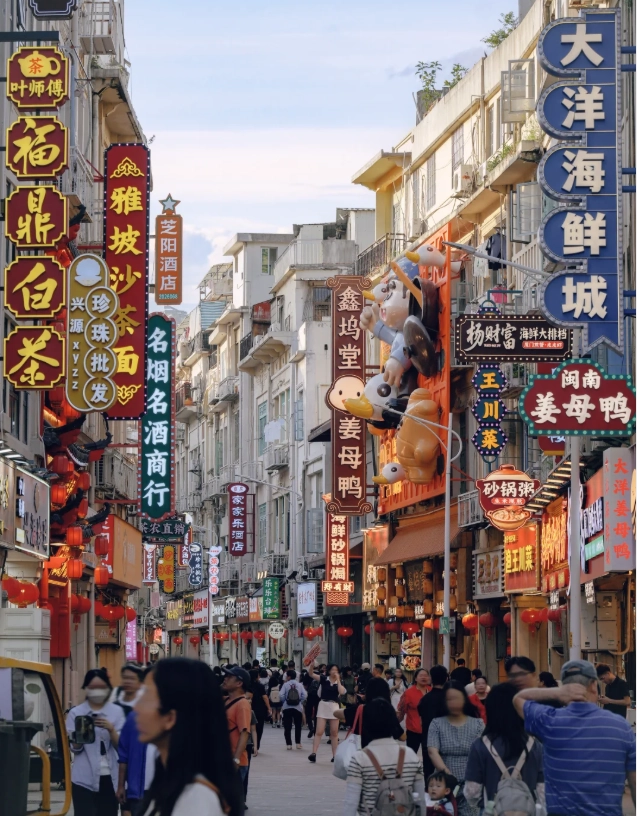
Key Buildings to Spot
| Building | Location (near intersection) | Architectural Style | Historical Note |
|---|---|---|---|
| Former Xiamen Postal Administration | Zhongshan Road & Lujiang Road | Neoclassical with baroque details | Built 1928, still functions as a post office |
| Huaqiao Building (Overseas Chinese Mansion) | No. 119-121 | Art Deco with Chinese cloud patterns | Completed 1934, tallest building in Xiamen at the time |
| Xiamen Film & Television Studio (former cinema) | No. 2-8 | Streamline Moderne | Opened 1930 as "Tianxing Theatre" |
| Bank of China Building (former) | No. 42 | Renaissance revival | Once the headquarters of the Bank of China in Xiamen |
Pro tip: The best preserved facade is the Former Postal Administration at the eastern end. Stand across the street near the water fountain for the full view. But don't linger too long—the real gem is the Huaqiao Building, which most guidebooks barely mention. I often tell my guests to look at the top: you'll see Chinese-style "ruyi" (scepter) motifs carved into the concrete, mixed with symmetrical Art Deco lines. It's a fusion you won't find anywhere else.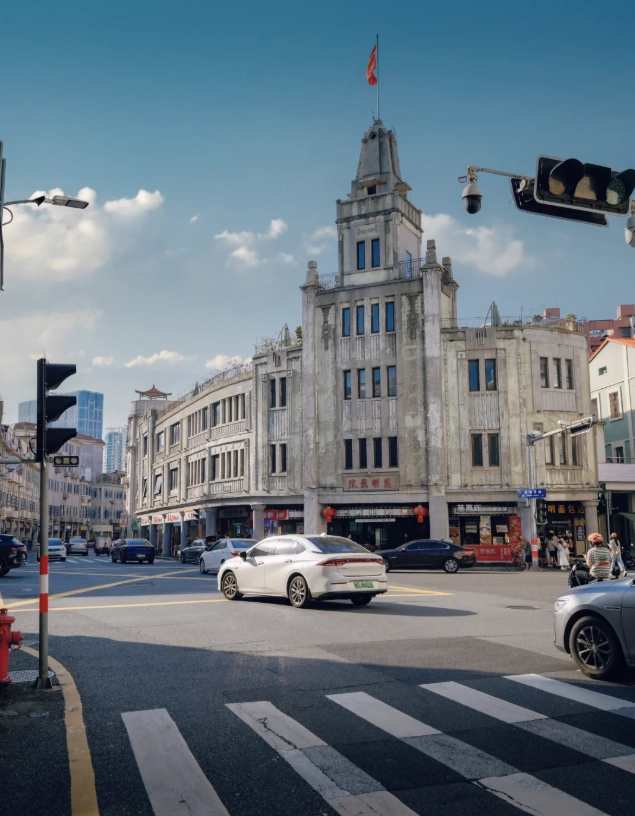
Best Time for the Walking Tour
Most tourists hit Zhongshan Road around 11am or 3pm. Big mistake. The sun is harsh, shadows are ugly, and the crowds are thick. I take my groups at 4:30pm (winter) or 5:00pm (summer). Here's why:
- Golden hour light makes the warm-colored plaster glow.
- The street still has activity but not jam-packed.
- The arcades catch the low sun and create beautiful contrast.
- After walking, you can head straight to dinner at the nearby seafood stalls (I'll name a good one later).
If you're a photography enthusiast, aim for a clear day. The narrow street can be shaded, but the building tops catch the sun beautifully between 4:30 and 5:30. I once had a guest who insisted on shooting at noon—his portraits all had harsh shadows under the eyes. Don't be that person.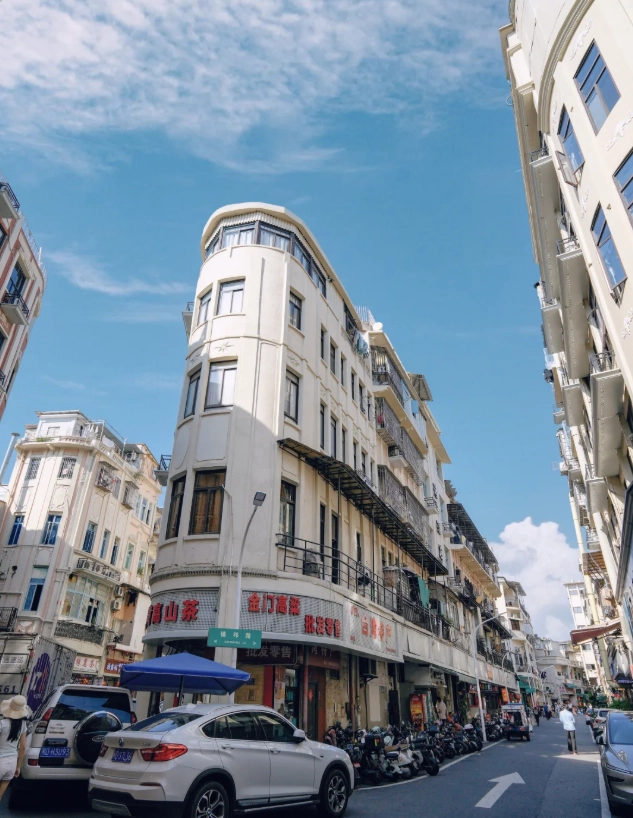
Practical Tips (Payment, Maps, Language)
Language: English signage is limited to major stores. I recommend installing Baidu Translate or Apple Translate, which can scan Chinese characters with your camera. Most young shop assistants know basic English, but older shopkeepers don't. A smile and pointing goes a long way.
Wi-Fi: Free Wi-Fi is available in many cafes, but you'll need a VPN to access Google, Instagram, etc. Set it up before arriving in China.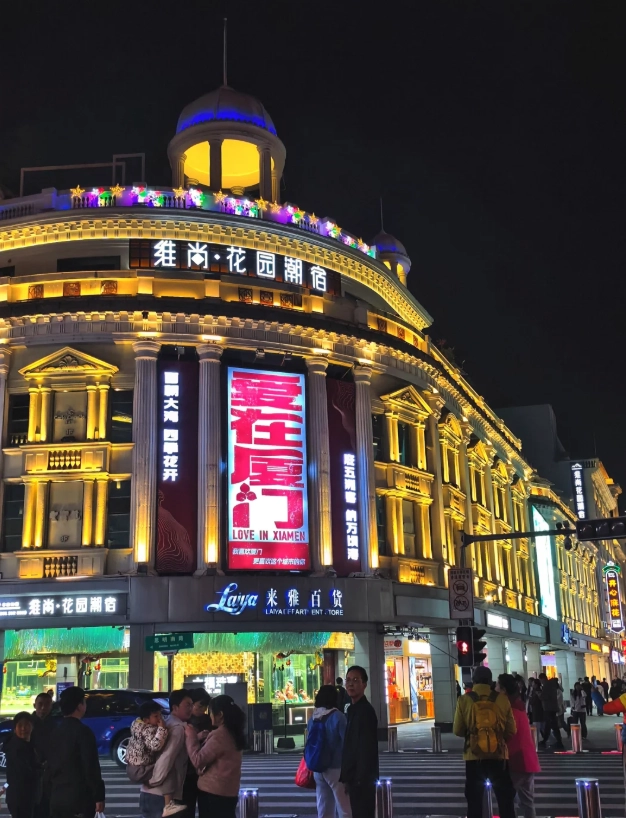
Suggested Itinerary (2.5 hours, chill pace)
- 4:00 PM – Start at Lujiang Road end (east)
Take a taxi or ride-hailing to "中山路与鹭江道交叉口" (Zhongshan Road & Lujiang Road intersection). Walk 50 meters west to the Former Postal Administration. Spend 10 minutes admiring the facade. Note: there's a public restroom inside the post office lobby (clean). - 4:20 PM – Stroll west toward Huaqiao Building (10 min walk)
Stop at No. 42 (Former Bank of China) – look for the carved stone eagles above the windows. Then continue to Huaqiao Building (No. 119-121). Take photos from the opposite side of the street. Photo spot: crouch low and include the arcade columns for depth. - 4:45 PM – Explore side alleys
Turn left into a small lane like "Daguo Hutong" (found opposite No. 135). You'll see a quiet row of old residential qilou with laundry hanging out—real life. Safety: these are private buildings; just look, don't enter. - 5:10 PM – Reach the western end (Gulangyu Ferry Pier)
The street opens to the ferry terminal square. Sit on a bench and watch the ferry boats—it's a nice contrast between ancient architecture and modern transport. - 5:30 PM – Dinner at a local favorite
Head to "Lianhua Seafood Restaurant" (莲花海鲜餐厅) on the parallel Siming South Road (siming nan lu 69 hao). It's a no-frills place with great steamed fish and oyster omelet. Average cost: 60-80 RMB per person. They accept Alipay but not credit cards. Order the "沙茶面" (satay noodles) as a side—a Xiamen specialty.
Alternative for rainy days: If it's pouring, use the arcades as cover—they're all connected. You can walk the entire 1.2km without getting wet. Also, consider visiting the Zhongshan Road Museum (free, inside an old qilou at No. 56) for indoor architecture exhibits.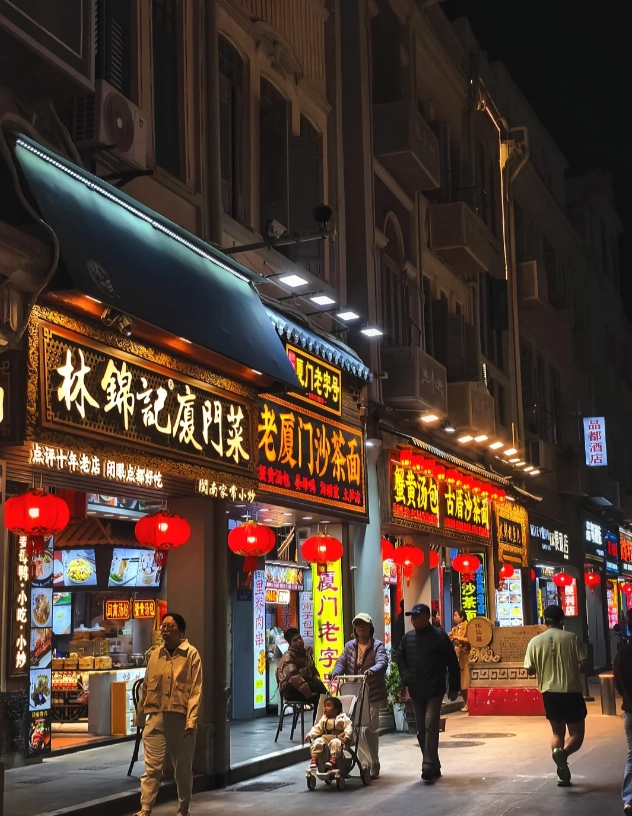
We almost booked a bigger company tour but are so glad we chose this local route instead. It was just our small group, and the guide seemed genuinely proud of the neighborhood — not reciting scripted facts but telling little stories about shopkeepers and old families. We loved how the route mixed the busy pedestrian street with sleepy side lanes where laundry hung above the herbal medicine shops. There was even a mini calligraphy lesson near an old guild hall, which was unexpected. The whole thing felt personal and unhurried. Best money we spent all week.
As someone who mainly travels for architecture and photography, this tour was a dream. The old facades along Zhongshan Road are stunning — peeling paint, crooked balconies, tangled wires, all of it. Our guide had an eye for composition and showed us the best angles for the arcades at golden hour. We even timed the end of the walk so we saw the street lanterns flicker on. It wasn't rushed, and there were plenty of chances to take photos without feeling like you were holding up the group. This is the walk to do if you want the real historic street character, not the chain shops that now fill the ground floors.
This was exactly the kind of walk I needed. The route weaves through the crowded main street and then duck into these gorgeous old courtyards where suddenly it's quiet and the light hits the brickwork just right. Our guide pointed out details on the qilou roofs I'd walked past a dozen times without noticing. We stopped for osmanthus tea and a tiny pastry at this hole-in-the-wall place that isn't in any guidebook. I came away with so many photos and a much deeper feel for the city's layers. Thoroughly recommend — book it early in your trip so you can revisit the spots afterward.
Solid walking tour if you're into urban history and old facades. The local route took us through the main pedestrian strip and then into a few quieter alleyways I would never have found by myself. The guide knew her stuff and pointed out details like the shuttered shopfronts and faded art deco tiles. Only reason I'm not giving full marks: one of the heritage buildings we were supposed to go into was closed for renovation, and the alternative was just a lobby. Still, I learned a lot and the pace was comfortable. Worth doing if you want context beyond just shopping.
I really wanted to love this walk because the arcade buildings are beautiful, but honestly the route felt a bit all over the place. We kept crossing back over the same stretch of Zhongshan Road, and without the map on my phone I would've been lost. The guide's stories were interesting when we paused, but most of the time we were just dodging scooters and selfie sticks. The snack stop was nice, but then we waited 20 minutes for the rest of the group. If you're expecting a smooth, curated tour, this might underwhelm you. Good architecture, average execution.