 Qiang Huang
Quick Navigation
I've been guiding tourists across China for years, and I can't count how many times I've seen travelers panic at a street stall because they only have cash. Here's the truth: China is nearly cashless. If you're not armed with WeChat Pay or Alipay, you'll struggle even to buy a bottle of water. This guide will get you set up in under 30 minutes, so you can focus on enjoying the Great Wall instead of fumbling for yuan.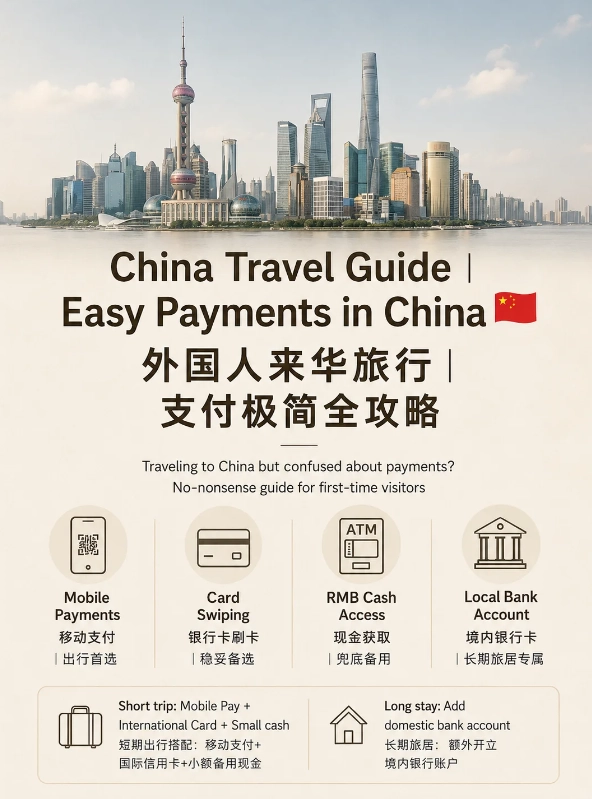
Why Chinese Mobile Payment Is a Must for Travelers
China's digital payment ecosystem is not a luxury—it's the default. Walk into any convenience store, taxi, or museum ticket booth, and you'll see QR codes everywhere. Over 90% of transactions in China are done via mobile payment. Even street vendors accept WeChat Pay. Carrying cash is not only inconvenient but can also be risky (pickpocketing is rare but happens). Most importantly, your foreign credit card will be rejected at 95% of places. I once watched a couple try to pay with a Visa card at a hotpot restaurant—the machine didn't even have a slot. They had to call a friend to transfer money. Don't be that tourist.
How to Set Up WeChat Pay as a Tourist
WeChat Pay is the most widely used payment method in China. Here's the step-by-step process.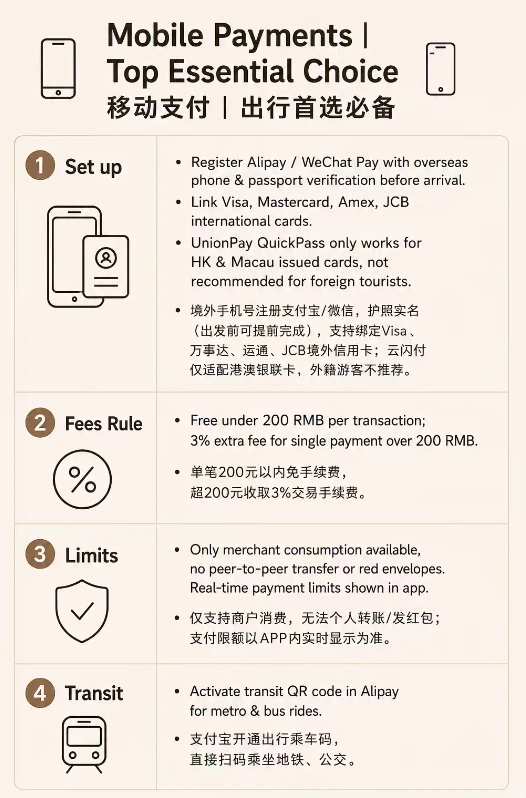
Step 1: Download and Register
Install WeChat from your app store. Register with your phone number (international numbers work). After registration, you'll need a friend to verify your account—this is the annoying part. If you don't have a Chinese friend, ask your hotel front desk. They're used to this request.
Step 2: Add Your International Bank Card
Go to Me > Services > WeChat Pay > Wallet > Cards > Add a Card. WeChat now accepts Visa, Mastercard, and JCB for tourist use. Your card must be linked to a non-Chinese bank. Enter your card details and billing address. The system may ask for a one-time SMS verification. If it fails, call your bank to allow international transactions.
Step 3: Verify Your Identity (Passport Required)
This is where many tourists give up. WeChat requires real-name authentication for payments above a small limit. You'll need to upload a photo of your passport and a selfie. The interface is in Chinese, so use your phone's translate screen feature or ask a hotel staff for help. Once approved (usually within 24 hours), you're set.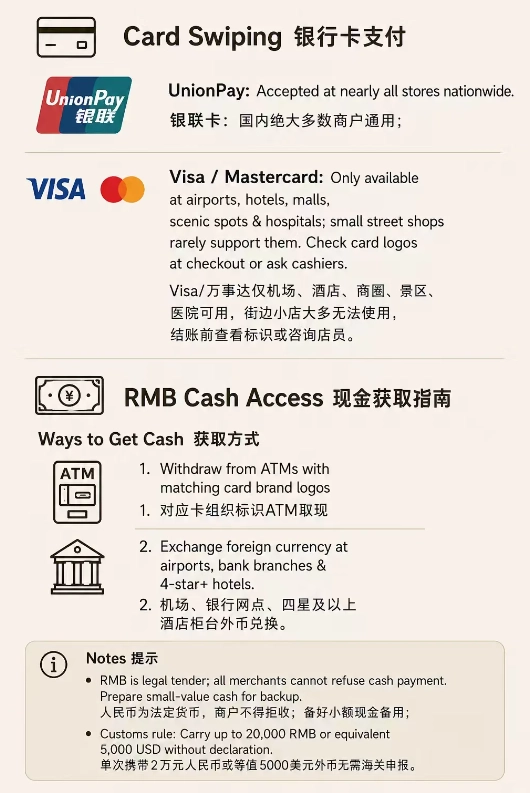
Pro Tip: If you encounter the "WeChat Pay requires a Chinese bank card" error, don't panic. The international card binding works for most foreigners. If it doesn't, try Alipay instead—it's more foreigner-friendly.
How to Set Up Alipay as a Foreigner
Alipay has a dedicated international version called "Alipay Tour Pass" that's designed for tourists. Here's the easy route.
Option A: Use Alipay Tour Pass (Recommended)
- Download Alipay and select "International" on the login screen.
- Choose "Tour Pass" when prompted. This is a prepaid virtual card that you top up using your own credit card.
- You can load up to 2,000 RMB at a time, and unused funds are refundable.
- No passport verification needed for Tour Pass! It's the fastest method.
Option B: Full Alipay Account with Foreign Card
- Register Alipay with your international phone number.
- Go to Me > Bank Cards > Add a Card. Alipay supports Visa, Mastercard, and Amex.
- Complete identity verification by uploading your passport and taking a live photo. Approval is usually instant for foreigners.
- You can now pay directly at any merchant scanning a QR code. Alipay also offers a handy translation feature in the app.
| Feature | WeChat Pay | Alipay |
|---|---|---|
| Setup Difficulty | Medium (needs friend verification) | Easy (Tour Pass no verification) |
| International Card Support | Visa, Mastercard, JCB | Visa, Mastercard, Amex |
| Refund of Unused Funds | No refund on balance | Tour Pass refundable |
| English Interface | Partial (some menus Chinese) | Full English available |
| Most Accepted | Street vendors, small shops | Same, but stronger in e-commerce |
Where Can You Use Mobile Payment in China?
Almost everywhere, but let me break it down by category so you know what to expect.
- Restaurants & Street Food: Every vendor displays a QR code. Even tiny noodle shops accept it. Cash might be refused if they have no change.
- Transportation: Didi (Uber equivalent) requires mobile payment. Metro stations in major cities (Beijing, Shanghai, Guangzhou) have QR code ticket machines that accept WeChat/Alipay. Taxis prefer mobile payment but may accept cash.
- Attractions: Forbidden City, Great Wall, Shanghai Disney—all ticket counters accept QR payment. Many also require advance booking via WeChat mini-programs (annoying, I know). Use Trip.com or Klook for English-friendly booking.
- Hotels: International chain hotels (Hilton, Marriott) still accept credit cards, but local hotels and hostels prefer mobile payment.
- Convenience Stores & Supermarkets: 7-Eleven, FamilyMart, Walmart—all accept WeChat/Alipay.
Insider Advice: Don't rely on Google Maps for navigation—it's blocked and inaccurate in China. Use Apple Maps (which works pretty well) or the Chinese app AMap (called "Gaode" in English). Download it before you go, and always have the address written in Chinese to show taxi drivers.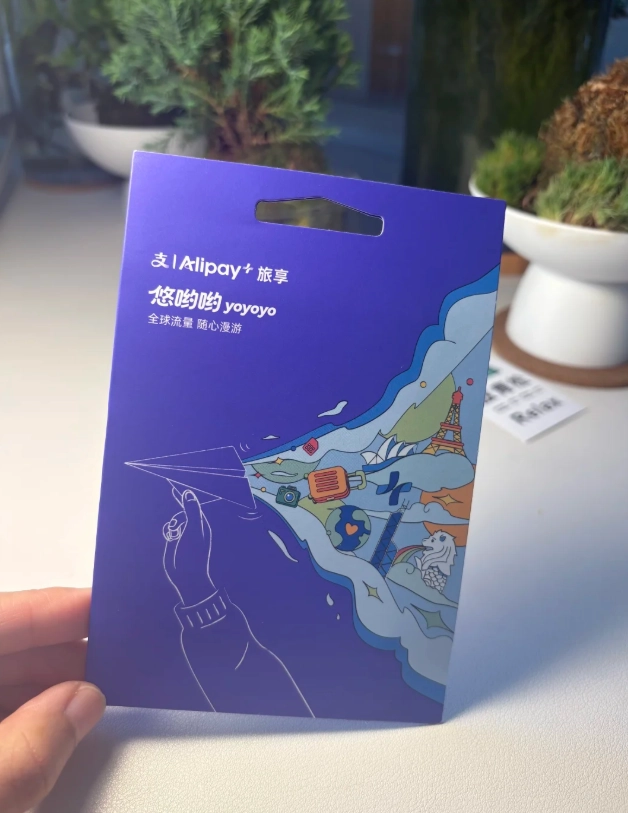
Common Pitfalls and How to Avoid Them
I've seen countless tourists make the same mistakes. Here are the top three, plus my personal fixes.
1. Assuming You Can Use Your Home Credit Card
Your Visa or Mastercard will be rejected at 90% of places. Even at hotels that accept it, there's often a 3% surcharge. Don't be stubborn—set up mobile payment immediately upon arrival. Ask your hotel Wi-Fi password first thing.
2. Forgetting a VPN
WeChat and Alipay work fine without a VPN, but many Western websites (Google, Facebook, WhatsApp) are blocked. For translation, use Apple Translate (works offline) or Baidu Translate. If you need to access your bank's app, you'll need a VPN. Set it up before you leave home—most free VPNs don't work in China.
3. Not Having a Backup SIM
Your home carrier's roaming data is expensive and slow. Buy a local SIM card at the airport (China Mobile, China Unicom, or China Telecom). You'll need your passport to register. Alternatively, rent a portable Wi-Fi device. Trust me, trying to scan a QR code with a laggy connection is frustrating.
Real story: Last month, a couple tried to buy dumplings at Xi'an Muslim Quarter but their Alipay Tour Pass hadn't been topped up. They had exactly 20 yuan in cash—just enough for one plate. I ended up treating them. Don't let this be you. Always keep at least 200 RMB in cash for emergencies, and check your digital balance daily.
What About Cash and Credit Cards?
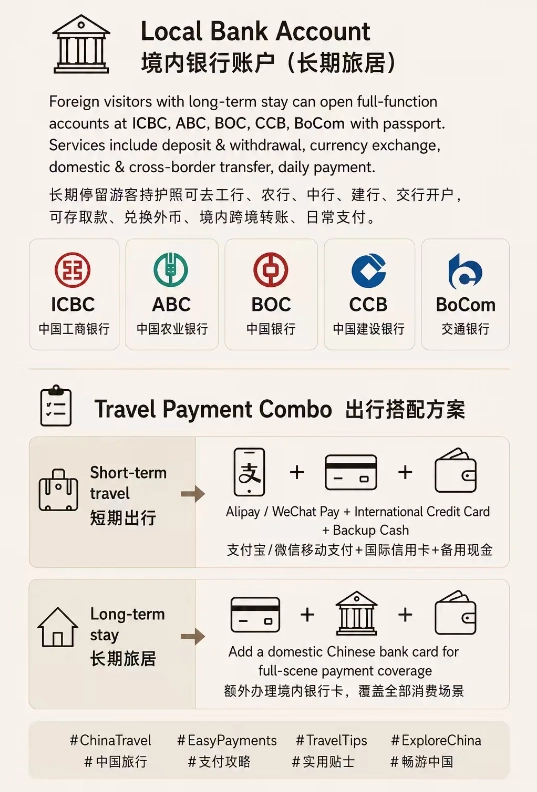
Cash is still legal tender, but you'll find it difficult to break large bills. Small merchants often don't have change for anything larger than 50 RMB. ATMs accept foreign cards (look for Bank of China, ICBC, or HSBC) and dispense RMB. The exchange rate is decent. However, you'll need cash for things like rickshaw rides (some drivers are elderly and only take cash) or in remote villages.
Credit cards: Only accepted at international hotel chains, high-end restaurants, and some shopping malls. Even then, they may ask for a minimum spend. Don't rely on them.
Frequently Asked Questions
This content has been fact-checked to ensure informational precision. Verified and fact-checked by the editorial team.








This is the first thing I've read that made mobile payment in China actually make sense. I'm not a tech-savvy traveler, usually the last one to figure out new apps, but the step-by-step flow in this article was so easy to follow. I set up Alipay while sitting in my hotel lobby, used it for hotpot that night, and haven't touched cash since. The FAQ about transaction limits and refunds alone is worth it. If you're going to China and getting nervous about not having cash, just read this.
I've been to China four times and still learned something here. The writer knows their stuff — I spent an embarrassing amount of time during my last trip fumbling with cash because my old WeChat was linked to a foreign number that stopped working. This guide explains exactly how to avoid that mess. The instructions are clear, the tone is calm, and the 'don't get stuck' checklist at the end is perfect. I've already sent it to two friends heading to Shanghai.
I usually avoid reading 'digital nomad' style articles, but this one was refreshingly practical. I'm a Canadian with no Chinese bank account, and it walked me through linking a Visa card to Alipay in about fifteen minutes. The part about getting a temporary tourist number for verification was a lifesaver. By day two I was scanning QR codes at fruit stalls, convenience stores, and even a 7-Eleven without ever pulling out my wallet. Honestly, this article deserves a medal.
This is a genuinely helpful primer, especially for someone who hasn't been to China since 2019. The author clearly explains the order you should set things up: get the app, add your card, verify identity, then practice with a small transaction. I only knock off a star because the article uses screenshots from an older app version, and the typography is a bit cramped on my phone. Still, I landed in Beijing and paid for my airport express with no problem.
I was excited to find a guide on this because I'm heading to Chengdu next month. The beginning is great, but after the first few sections it starts repeating the same warnings about cashless society. I wish there were more real screenshots and less filler. Also, the bit on WeChat Pay feels like an afterthought — which is annoying since half the vendors I dealt with only had that. It's okay if you need to understand Alipay basics, but don't expect it to be a complete solution.