 Wei Zhang
Quick Navigation
I still remember the first time I stepped out of Jiefangbei subway station. My phone said I was on the ground floor, but a bridge right in front of me connected to the 11th floor of a neighboring building. Welcome to Chongqing — a city where architects laughed at gravity and won.
Forget flat maps. Chongqing's mountain city architecture turns urban planning into a vertical puzzle. Cliffs, rivers, and hills forced builders to get creative. The result? Stilted wooden houses clinging to slopes, a monorail that passes through a residential tower, and pedestrian bridges that lead into skyscrapers' mid-levels. As a tour guide who has dragged dozens of groups through this megalopolis, let me show you the real deal — no fluff, just actionable insights.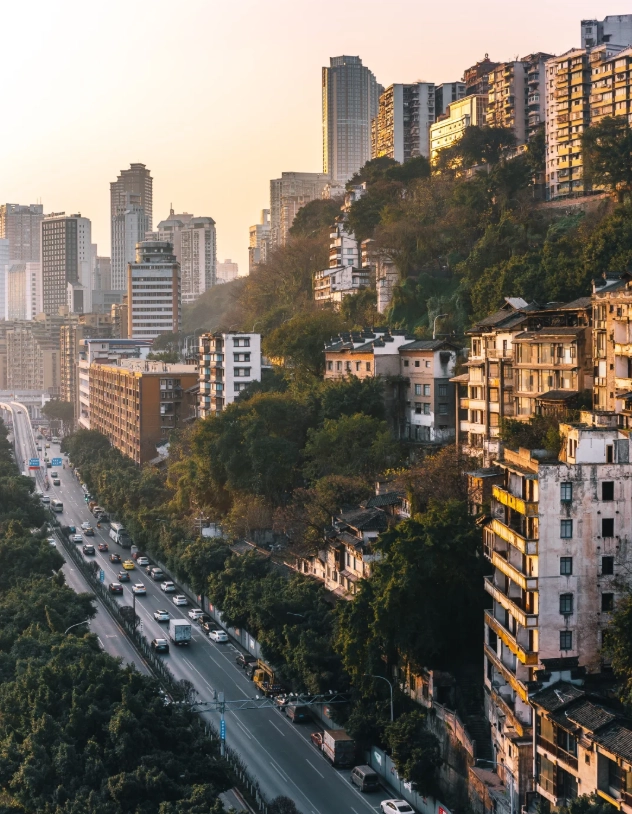
What Makes Chongqing Mountain City Architecture Unique
Chongqing mountain city architecture is defined by its extreme topography. The city sits where the Jialing River meets the Yangtze, surrounded by steep ridges. Traditional diaojiaolou (stilted houses) date back centuries — wooden pillars anchored into cliffs to create flat living spaces. Modern architects took that same DNA and scaled it up. You'll find buildings with multiple ground floors, depending on which street you enter from.
One iconic example? The Liziba Monorail Station. The train literally glides through the 8th floor of a residential apartment building. It wasn't built for a gimmick — the terrain left no other option. The building and the monorail were designed together in the 1990s, a perfect marriage of transit and dwelling.
Top 5 Architectural Wonders You Must See
1. Hongya Cave (Hongyadong)
A dazzling 11-story stilted complex built into a cliff face. It looks like a page from a fantasy novel — traditional Sichuanese roof tiles, glowing red lanterns, and escalators that take you from the river level up to a road above. Inside: souvenir shops, restaurants, and a few disappointing tourist traps. But the exterior at night? Unforgettable.
- Address: 88 Cangbai Road, Yuzhong District (渝中区沧白路88号). Show this in Chinese to your taxi driver.
- Opening hours: 11:00–23:00 (buildings), but the best photos are taken from the bridge outside after sunset (18:30–21:00).
- Tickets: Free entry to the building complex. No advance booking needed. But bring your passport if you want to access some of the rooftop viewing areas (they occasionally check).
- Payment: All shops accept Alipay/WeChat Pay. Cash is rarely used, and international credit cards are not accepted inside.
- How to get there: Take Metro Line 1 or 6 to Xiaoshizi Station, Exit 2. Walk 5 minutes across the bridge. Google Maps won't show the exit number — use Apple Maps or AMap Global and search "Xiaoshizi subway station exit 2."
2. Yangtze River Cableway
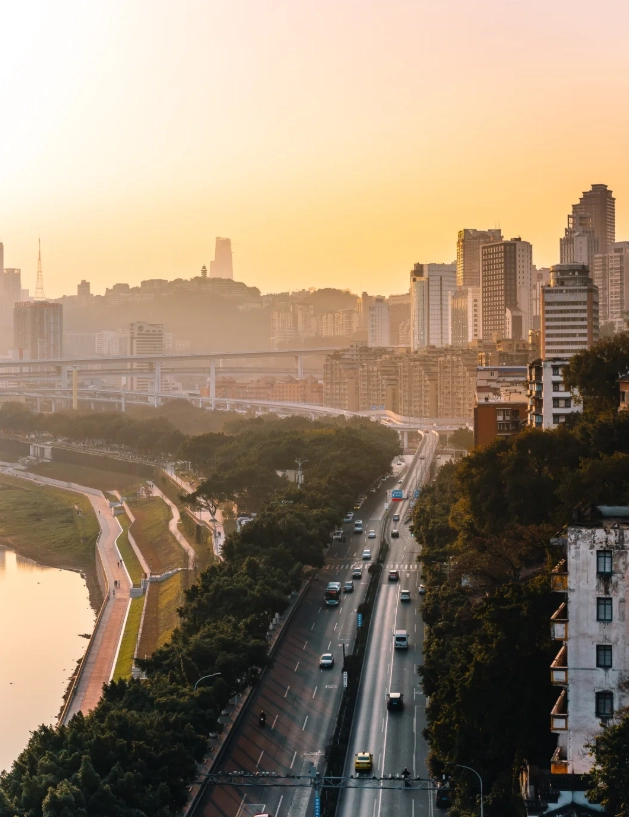
A gondola ride across the Yangtze, offering a bird's-eye view of the city's vertical skyline. Opened in 1987, it was originally a commuter cable car for workers. Now it's a tourist magnet — and worth every yuan for the perspective alone. You'll see the old chaotic roofs of Nan'an District contrasting with the glass towers of Yuzhong.
- Address (South Station): 5 Xinhua Road, Nan'an District (南岸区新华路5号).
- North Station: 9 Changjiang Avenue, Yuzhong District (渝中区长滨路9号).
- Opening hours: 7:30–22:00 (last entry 21:30).
- Tickets: Single trip ¥20 (cash, Alipay, WeChat, or credit card at the booth — yes, international Visa/Mastercard works at the main ticket window). Round trip ¥30. No reservation needed on weekdays; weekends may have a 20-minute queue.
- Recommendation: Go from South to North around 17:00 — you'll get the sunset over the skyscrapers, then exit near Jiefangbei for dinner.
3. Chaotianmen & Raffles City
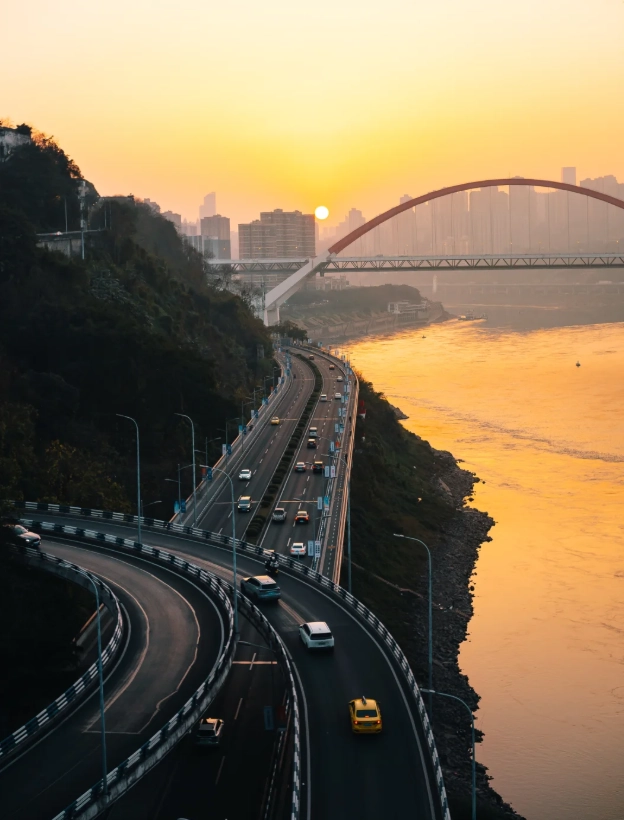
A massive ship-shaped skybridge connecting four skyscrapers. Designed by Moshe Safdie, Raffles City is the crown jewel of modern Chongqing architecture. The Crystal Sky Bridge (at 250m high) offers a panoramic walkway. The building's shape is meant to evoke a sailing ship — fitting for the confluence of two great rivers.
- Address: 5-7 Changjiang Binjiang Road, Yuzhong (渝中区长江滨江路5-7号).
- Observation deck: "The Skywalk" on the 50th floor. Tickets ¥180 (¥90 for children 1.2–1.4m). Book on Trip.com or Klook to skip the line. Bring your passport for identity verification.
- Opening hours: 10:00–22:00 (last entry 21:30).
- Payment: Credit cards accepted at the main ticket office, but Alipay is smoother.
4. Shancheng Trail (Mountain City Trail)
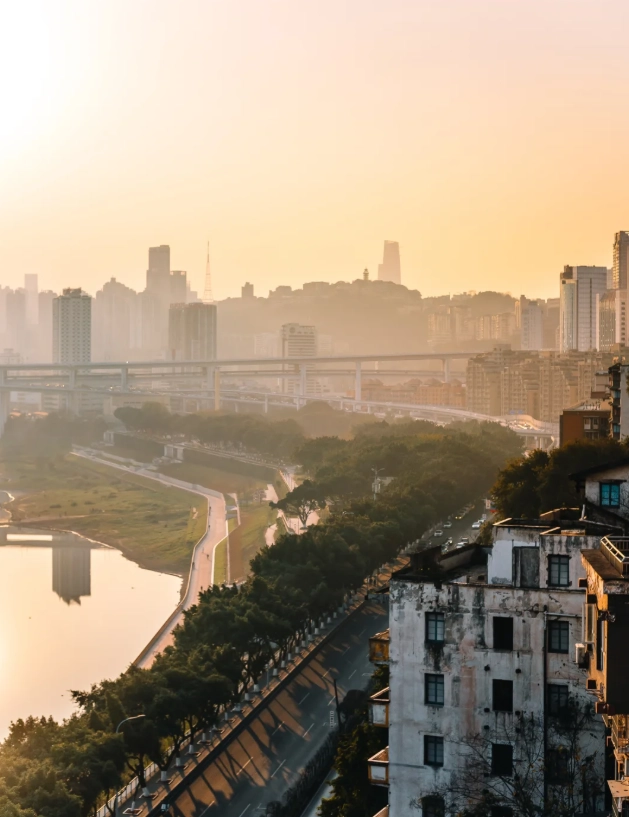
A walking path that connects the upper and lower parts of the city, passing through old stilted houses and hidden stairs. This is where you feel the real mountain city architecture — not the polished landmarks, but the everyday fabric. The trail starts at the top of the city near the anti-Japanese War relics and descends to the river. It's a 30-minute walk if you're fast, but take an hour to soak in the view.
- Start point: Intersection of Zhongshan 3rd Road and Renmin Road (中山三路与人民路交叉口). Look for a stone archway that says "Shancheng Diyidao" (山城第一道).
- End point: Near the Yangtze River Cableway's North Station.
- Difficulty: Moderate — many steps but no climbing. Wear sturdy shoes. I've seen too many guests in flip-flops struggle.
- Tip: Bring water and a flashlight if going after sunset — some alleys are poorly lit.
5. Ciqikou Ancient Town
A rebuilt Ming-Qing era merchant town perched on a hillside, with steep staircases and tile-roofed buildings. Yes, it's touristy, but the bones of mountain architecture are visible: houses built on stilts, narrow alleys that follow the contour, and a view of the Jialing River from the top. Arrive before 9:00 to avoid the crowds.
- Address: 1 Ciqikou Main Street, Shapingba District (沙坪坝区磁器口正街1号).
- Opening hours: 24/7 open area. Shops open 9:00–21:00.
- Ticket: Free. No reservation needed.
- How to get there: Metro Line 1 to Ciqikou Station, Exit 1. The exit leads directly into the old street.
How to Navigate the 3D City
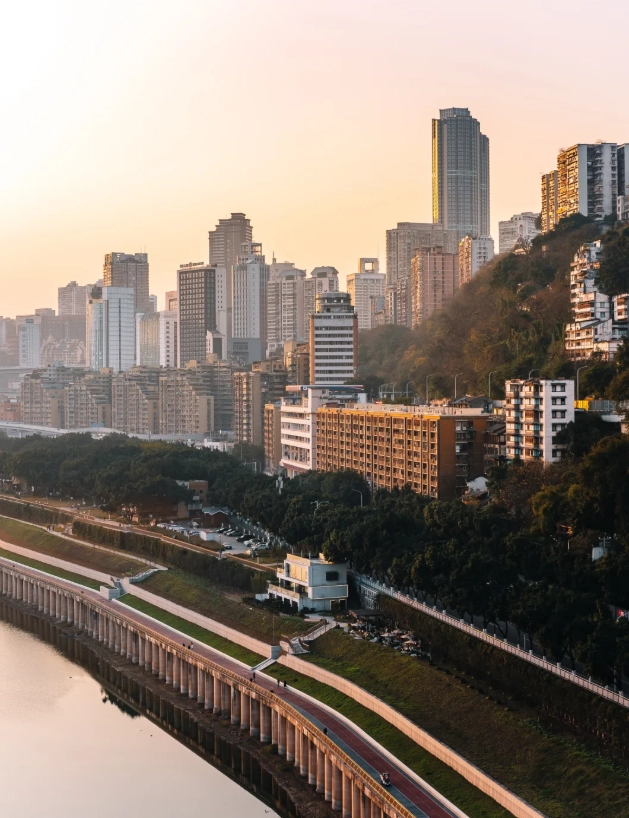
Finding your way around Chongqing's mountain city architecture can be dizzying. Here's what I've learned after years of pointing to wrong directions:
- Ditch Google Maps. It thinks buildings are flat. Use Apple Maps (works reasonably well) or download AMap Global (GaoDe) — its English interface shows building floors and pedestrian overpasses.
- Don't trust ground level. A building's "1F" might be the 4th floor on the other side. Always ask pedestrians "Is this the same as street level?" or look for signs indicating elevation.
- Taxi / Didi: Always show the Chinese address. Didi (DiDi Chuxing) now has an English app. Pay with Alipay linked to international card, or ask the driver to scan your WeChat Pay QR code. Cash is accepted but drivers rarely have change.
- Stairs are everywhere. Know that you'll climb at least 5 flights of stairs per day — even inside metro stations. Elevators exist but aren't always reachable from the street.
Practical Tips for Your Visit
Payments:
Assume all small vendors and most ticket booths only accept mobile payments. Hongya Cave trinket sellers, street food stalls, even some metro ticket machines (though machines also take cash and UnionPay cards). Link your Visa/Mastercard to Alipay before you come — the process takes 15 minutes and saves you headaches. WeChat Pay is accepted everywhere too, but Alipay is more foreigner-friendly with English support.
Language:
English signage is scarce away from major attractions. Download Apple Translate or Baidu Translate offline. The photo translation feature is a lifesaver when reading menus or signs. For complex conversations, I use the voice mode — it works surprisingly well for English–Mandarin.
Booking Attractions:
Most free attractions (like Hongya Cave, Ciqikou) need no reservation. But for paid ones like the Yangtze River Cableway or Raffles Skywalk, you can buy tickets on site with cash or card. No need to book weeks ahead unless it's a national holiday (May 1st, October 1st) — then everything becomes a war zone. For convenience, use Trip.com or Klook to prepay and skip the line.
Best Time to Visit:
April–May and September–October offer pleasant weather and clear skies. Summer (June–August) is brutally hot and humid — I've had guests suffer heatstroke at 11 AM. If you come in summer, sightsee only from 16:00 onward. Winter is foggy and chilly, but the fog actually makes the skyline look more mystical — minus the crowds.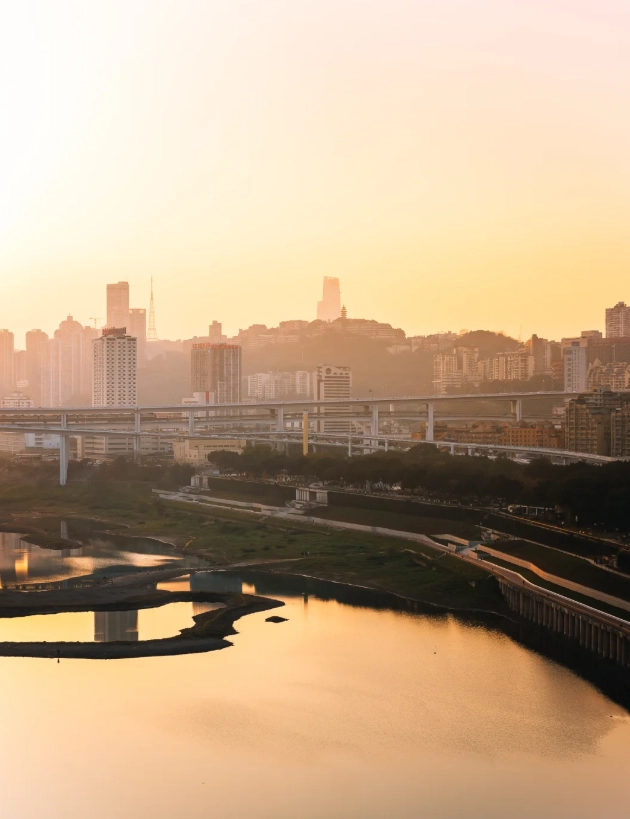
FAQ
Hop on that monorail, wander through the stilted alleys, and let Chongqing's mountain city architecture blow your mind. It's not just a city — it's a lesson in human ingenuity. Got more questions? Drop them in the comments and I'll answer as a local guide would. Safe travels!
Verified and fact-checked by the editorial team. This content has been fact-checked to ensure informational precision.
I just came for photography and left with over 500 shots. Chongqing's mountain architecture is a treasure trove of impossible angles—elevated plazas, bridge-under-bridge-under-bridge, and these super narrow alleys where you can look straight down into someone's living room. The concierge at my hotel recommended a route from Guanyinge to Shibati, and it was perfect. It can get a bit touristy near the main viewpoints, but even the 'backstage' parts of the city are photogenic. If you have good knees and want a once-in-a-lifetime perspective, do this walk. My new favorite city.
For anyone obsessed with urban design and weird geography, this is the holy grail. The '3D wonderland' nickname is not an exaggeration—I stood on the 11th floor of a building and walked out onto a street. The constantly changing sightlines, the hidden courtyards, the metro crossing right through a residential block... it blew my mind. I came here during a drizzly morning and the wet stone staircases reflected the neon signs beautifully. Not for the faint-hearted if you hate stairs, but as an architect, this walk gave me so many new ideas. Absolutely 5 stars.
Okay this is the single coolest urban walking experience I've ever had. Every corner makes you say 'how did they even build that?' The mix of old stairways, sleek glass towers, and tiny eateries tucked into concrete corners feels like stepping into a sci-fi movie. I started at Liziba and followed the Huangjuewan steps—the atmosphere was busy but magical, especially around sunset when the lights started flickering on. Bring good shoes and a camera. I'm still thinking about those layered rooftops days later. 10/10 would recommend.
Chongqing's architecture is genuinely like nothing else—the way the buildings climb over each other and the elevators connect to streets on different levels feels almost surreal. I booked this as a self-guided afternoon stroll and it didn't disappoint. The only reason it's not a perfect score: my legs were cramping by the end, and there were a few spots where the construction scaffolding blocked some really interesting views. Still, walking through the narrow alleys and popping out onto a balcony overlooking the river was absolutely worth it.
I really wanted to love this walk, and the architectural marvels are undeniable—stepped streets, cantilevered buildings, and bridges stacked like a real-life game of Jenga. But honestly, my phone's map was useless, and I got lost twice in the maze of staircases. It's fascinating if you're up for aimless wandering, but if you're on a tight schedule, it gets a bit frustrating. Also, the signage is almost nonexistent. Some breathtaking viewpoints made it worthwhile, but I left feeling more annoyed than inspired.
Best read I had on the train to Chongqing. This article focuses on walking, which is perfect for me because I do not spend money on paid observation decks. The descriptions of free rooftop paths and elevated public bridges saved me a ton and got me straight into the local vibe. My favorite part was about the elevated pedestrian walkways connecting apartment towers - people were walking their dogs high above the street, and I never would have noticed that without the author's guidance. Practical, vivid, and absolutely worth sharing with my backpacking crew.
As someone who sketches buildings, I loved how this piece treated Chongqing's architecture not as a checklist of landmarks but as one continuous vertical landscape. The writer highlighted the ordinary details that make this city magical: narrow staircases, old community elevators, rooftop tiles, and the way a metro line slices straight through a residential tower. It made me slow down and notice things I would definitely have walked past. If you care about urban design or want to understand why Chongqing feels like three cities stacked on top of each other, this article is a gem.
This is exactly what I needed before my first trip to Chongqing. I had heard the term 3D urban wonderlands before, but it never clicked until I followed the author across the elevated plazas and down the steep alleyways to the river. The writing is sensory and real: the salty hotpot smell drifting into the stairways, the golden neon bouncing off the Yangtze, the endless hum of footbridges. I planned a whole day around Hongyadong and did not get lost once. Highly recommend for anyone who wants to see the city with fresh eyes.
Really solid intro to Chongqing's vertical architecture. I loved the part about the monorail running through Liziba; it finally explained why people are always filming there. The descriptions of the stilted houses at Hongyadong were vivid, and the walk-through idea kept me reading. My only reason for not giving 5 is that the section on the hidden old stairways ends too abruptly. I wanted more tips on finding them because some are tucked behind construction fences. Still, a useful article to read before you wander.
I wanted to love this because Chongqing is completely wild, but the article felt more like a list of pretty adjectives than a real walkthrough. The author kept calling everything 3D and layered without giving practical details. I still don't know which metro station to exit for the best view of Hongyadong or how to avoid the endless stairs near the old city. There were a few good descriptions of the neon lights along the river, but I needed more landmarks and less poetic filler.