 Fang Wang
Quick Guide — What's Inside
Let me guess—you've seen those jaw-dropping photos of Kawagebo peak glowing gold at sunrise, and you're thinking, "How long do I actually need here?" I've been guiding trips to Meili Snow Mountain for years, and the honest answer? It depends—but I'll give you the exact formula so you don't waste a minute or miss the magic.
Most online itineraries toss out "3 days" like it's a universal truth. But here's the catch: they ignore the brutal 6-hour drive from Shangri-La, the altitude that forces you to slow down, and the fact that sunrise at Feilai Temple is only spectacular in certain months. If you follow those cookie-cutter plans, you'll end up rushed, exhausted, and probably disappointed.
My bottom line: first-timers should plan for 3–4 full days (not counting travel to/from Shangri-La). That gives you time to acclimate, catch the sunrise without stress, and do the legendary Yubeng hike. Below I break down exactly how to optimize each day, plus the shortcuts and pitfalls I've learned the hard way.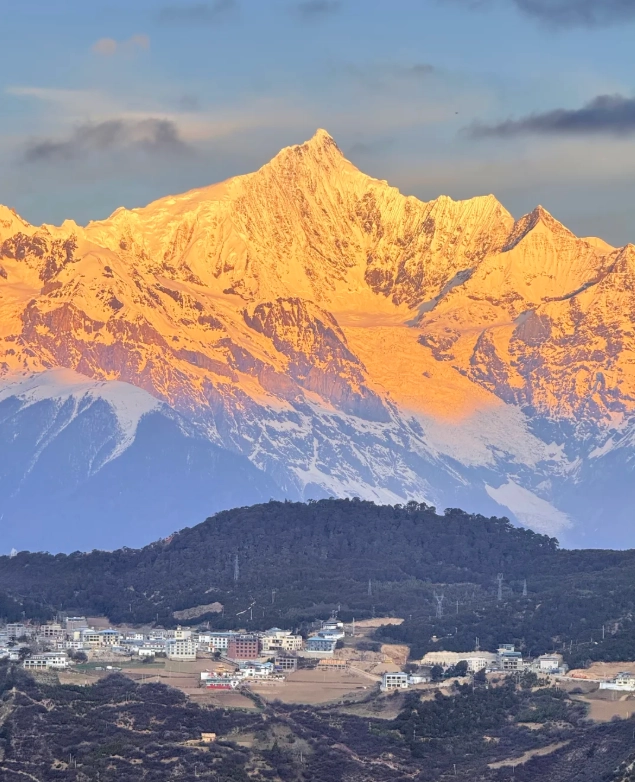
Real Talk: How Many Days Do You Actually Need?
The number depends on two things: your starting point and your hiking ambition. Almost everyone arrives from Shangri-La (6–7 hours by car) or Lijiang (10+ hours). Flying directly to Diqing Shangri-La Airport saves time, but you still need to factor in altitude acclimation (Meili base is ~3,400m, and Yubeng hikes go above 4,000m).
Crash Course: Time Options at a Glance
| Duration | Best For | What You Can See/Do |
|---|---|---|
| 2 days (tight) | Photographers on a sprint | Sunrise at Feilai Temple, Mingyong Glacier cable car, quick look at Yubeng entrance (no hike) |
| 3 days (sweet spot) | Most first-timers | Feilai sunrise, full day in Yubeng (Ice Lake or Holy Lake), some flexibility |
| 4 days (relaxed) | Hikers who want both Ice Lake & Holy Lake, or those prone to altitude sickness | All of the above plus a buffer day for weather, rest, or exploring the smaller villages |
Pro tip: If you only have 2 days, skip the deep Yubeng hikes and instead do the Mingyong Glacier—it's closer, cable car makes it easy, and you get incredible glacier views. But honestly, if you have the chance, 3 days is where the magic happens.
Day-by-Day Plan: Getting It Right
Day 1: Arrive & Settle at Feilai Temple Area
Most visitors arrive late afternoon from Shangri-La. You'll probably step out of the car at around 4–5 PM, dizzy from the switchbacks and already feeling the thin air. Don't plan anything strenuous today. Check into a guesthouse in Feilai Village (飞来寺)—it's the main base with direct views of the sacred peaks. I always tell my clients: "Walk slowly, drink water, and just watch the sunset light hit Kawagebo."
Dinner tip: The local hotpot with yak meat is a must-try, but be warned—it's heavy and can aggravate altitude symptoms if you overeat. Go light.
Evening move: Scout the sunrise spot at Feilai Temple platform (it's a 5-minute walk from most hotels). Check if there's cloud cover. If it's clear, set your alarm for 6:00 AM—you don't want to miss the golden moment.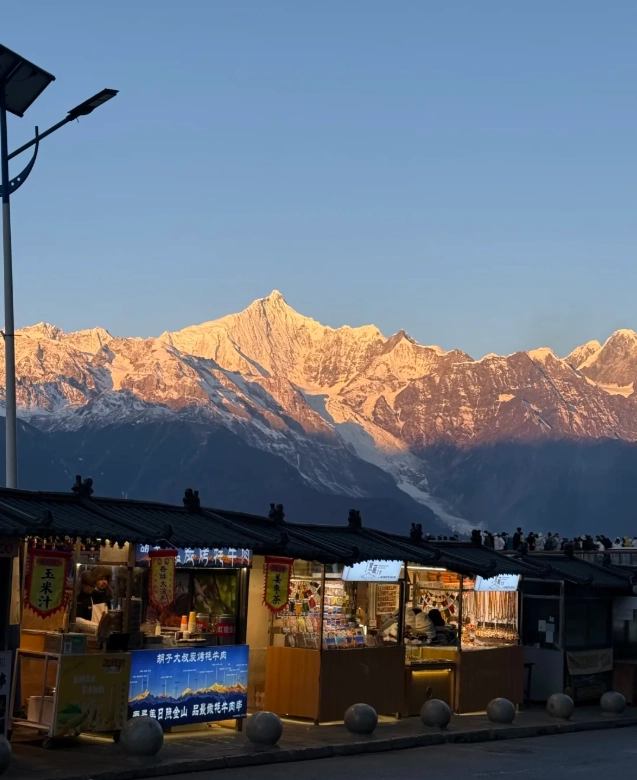
Day 2: Sunrise + Transfer to Yubeng Village
6:30 AM – Sunrise at Feilai Temple. This is the main event. The first rays of sun ignite the peaks in orange and pink. It lasts only about 10–15 minutes, so be ready with your camera. Important: The viewing platform can get crowded in October–November. I recommend arriving at least 20 minutes early to claim a spot near the white pagodas on the left side—better angle and fewer elbows.
After the show, grab a quick breakfast. Then you'll drive to Yubeng Village (雨崩村)—the legendary hiking base. The drive takes about 1.5 hours (57 km) along winding mountain roads. At the entrance, you'll pay the park fee (¥55, cash preferred—card not accepted at the gate).
Getting into Yubeng: You have two options—trek 6 km downhill (2 hours) or take a local SUV for ¥200 per person. I've done both. The trek is scenic but steep; if you're already feeling altitude, just take the SUV. It saves energy for the real hikes tomorrow.
Once inside Yubeng, drop your bags at your guesthouse. Spend the afternoon exploring the upper village, visiting the small monastery, or just resting. Altitude check: Yubeng sits at ~3,050m, so you might still feel breathless.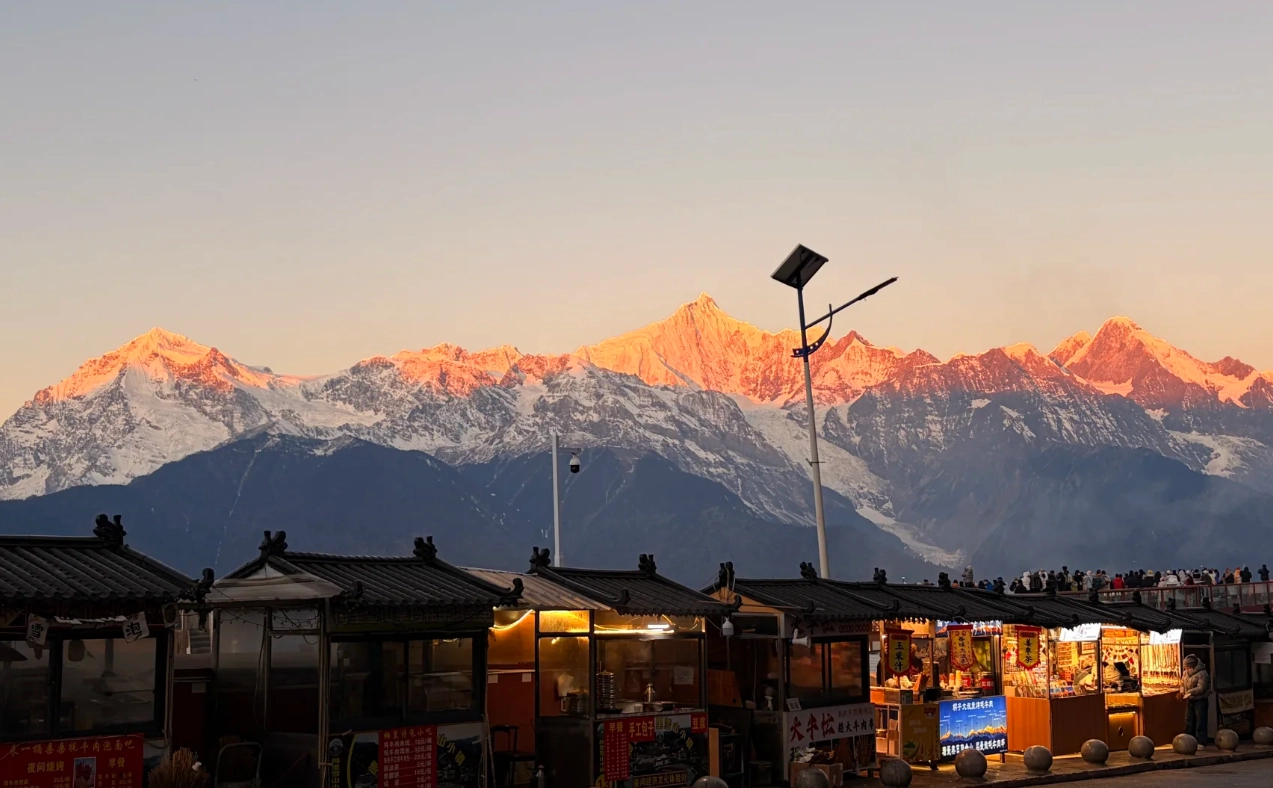
Day 3: Choose Your Adventure – Ice Lake or Holy Lake
Both are full-day hikes. You cannot do both in one day unless you're ultra-fit and start at 4 AM. Pick one based on your fitness and the weather.
| Hike | Distance (round-trip) | Elevation Gain | Time Needed | Scenery |
|---|---|---|---|---|
| Ice Lake (冰湖) | 12 km | ~700 m | 6–7 hours | Glacial lake surrounded by moraine, forest trail, close-up of the glacier |
| Holy Lake (神湖) | 14 km | ~1,000 m | 8–9 hours | Higher elevation, pristine alpine lake, fewer crowds, harder effort |
My recommendation: If you're a moderately fit hiker with no altitude issues, do Ice Lake. It's the classic Yubeng experience—you'll walk through mossy forests, cross streams, and end at a turquoise lake directly under the glacier. Start early (7 AM) and bring plenty of water and snacks. There are no shops on the trail.
Pro tip for Holy Lake: Only attempt this if you've already spent a day in Yubeng to acclimatize. The last section is a steep, lung-busting climb at over 4,000m. I've seen fit climbers turn back because of headaches. Listen to your body.
Back in the village by late afternoon, treat yourself to a hot shower (most guesthouses have solar heaters—water may be lukewarm if cloudy). Dinner is simple: noodles, rice, and local vegetables. Don't expect gourmet food up here.
Day 4: Hike Out & Depart
Wake up early for a last look at the morning light on the peaks. Then hike or take a SUV back to the park entrance (the same 6 km but uphill—allow 2.5–3 hours walking). From there, your driver can take you back to Shangri-La or continue your Yunnan journey.
If you have an extra day (Day 5): Consider visiting the Mingyong Glacier on your way out. It's easily accessible by cable car (¥75 one way) and offers a completely different perspective of the glacier's ice tongue. This is a great backup if you couldn't hike in Yubeng due to weather or altitude.
Must-Know Before You Go
Payment & Cash
This is crucial: Meili Snow Mountain area is very cash-dependent. Most ticket booths, local restaurants, and SUV drivers accept only cash or Chinese mobile payments (Alipay/WeChat). International credit cards? Forget it. I always tell my groups: "Withdraw enough cash in Shangri-La before you come—there are no reliable ATMs in Feilai or Yubeng."
Navigation
Google Maps is useless here—it'll show trails that don't exist. Download Apple Maps or 高德地图 (Amap) in English mode before you arrive. For the Yubeng trails, there are clear signposts in Chinese and English at major junctions. But I always recommend grabbing a screenshot of the trail map from the guesthouse—you'll likely lose cell signal once you enter the forest.
Altitude & Health
The highest point on the Ice Lake trail is about 3,900m; Holy Lake exceeds 4,100m. Altitude sickness is real. Symptoms: headache, nausea, dizziness. The only cure is descending. Diamox (acetazolamide) helps if you get a prescription before your trip. Also, avoid alcohol on your first night. I once had a guest who insisted on a beer at 3,400m—he spent the next day vomiting.
VPN & Translation
You'll need a VPN to access Google, Instagram, or WhatsApp. China Mobile and China Unicom both have weak signals in the mountains—sometimes only 2G. Download an offline translation app (like Baidu Translate) or just use Apple's built-in translate. Most locals in Yubeng speak only Chinese, so learn a few phrases: "Xièxiè" (thank you), "Duōshǎo qián?" (how much?).
Best Time to Visit
October and November are peak months—clear skies, crisp air, and the highest chance of seeing the golden sunrise. But it's also crowded and accommodation prices double. April–May and September are good alternatives: fewer tourists, still decent weather. Avoid July–August (monsoon rain, cloud cover blocks the peaks) and December–February (snow can close trails).
Great read! I had friends telling me I needed at least six days, but this guide helped me see that a well-paced 3 days was enough for the main viewpoints. The kilometer estimates and drive times were actually accurate – the road from Shangri-La did take longer than I thought, exactly as the article warned. Everything felt realistic, from the sunrise spot to the notes on respecting local customs. Really saved me from overplanning and packing in too much.
Honestly, this article has some good nuggets – the advice about weather being unpredictable at Meili is real. We were at the viewpoint for two foggy mornings and only caught a glimpse of the summit. But the itinerary itself felt a bit too general for non-hikers. It says to check for road closures but doesn’t explain how. It also didn’t mention how crowded Feilai Si can get in high season. Not a bad starting point, but I expected more detail.
Good, practical plan. I followed the 4-day version and it worked well overall. I especially liked that it didn’t oversell the idea of needing a full week. The only reason I’m not giving a perfect score is that I wished it had more detail on altitude sickness prevention and where to buy oxygen bottles in Shangri-La. The route pacing was solid, though, and the sunrise viewpoint suggestions were excellent.
As a photographer, I always struggle with how much time to leave for weather windows. This article laid out the minimum days clearly and honestly. I used the 3-day itinerary, caught a crystal clear view of Kawagebo on day two, and still had time to explore Mingyong Glacier. The advice on staying near Feilai Si instead of driving up from Deqin was spot on. More useful than most guidebook pages I’ve read.
This guide was exactly what I needed before planning my trip. I was so worried that two or three days wouldn’t be enough, but the day-by-day breakdown made it easy to see what was realistic. We followed the three-day option and had the best sunrise at Feilai Si. The tip about getting to the viewpoint before 7:30 seriously saved me – any later and the peak was completely covered. Highly recommend for first-timers who want solid logistics without rushing.