 Jing Song
Quick Map of This Guide
- Why This Route Confuses First-Timers
- Which Harbin Station Do You Leave From?
- How Long Does the Harbin to Jilin Train Take?
- How to Book Tickets as a Foreigner
- Seat Classes, Ranked Honestly
- Landing in Jilin City: What Happens Next
- A 24-Hour Jilin Plan Built Around the Timetable
- Mistakes I See on This Route Every Winter
- Harbin to Jilin Train FAQ
Wrong station. Wrong city. Missed train. I have watched all three happen before nine in the morning on the same trip — and not one of them had anything to do with the Harbin to Jilin train itself.
Here is the part that catches people. The Harbin to Jilin train is genuinely one of the easiest high-speed hops in northeast China. About 250 kilometers of track, departures spread across the whole day, and a fare that costs less than a decent dinner in Shanghai. Yet foreigners trip over the same three things every winter — booking on the wrong app, showing up at Harbin East instead of Harbin West, and assuming that the word Jilin means the provincial capital.
So take the short answer first. Book on the official 12306 app or on Trip.com, board at Harbin West Railway Station, and you will be standing on the Songhua River in Jilin City roughly two and a half hours later. Second class costs somewhere between ¥140 and ¥185 depending on the train. Your passport is your ticket. That is the whole route in three sentences.
Everything below is the part that goes wrong in between.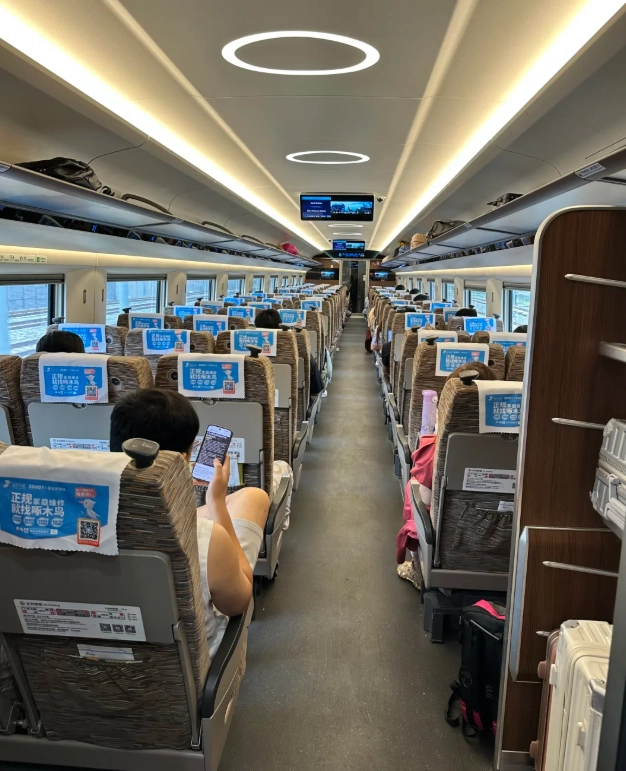
Why This Route Confuses First-Timers
I once had a client who booked a ticket to Jilin, arrived in Changchun, and spent forty minutes arguing with a taxi driver before he realized he was in the wrong city entirely. He had never noticed that Jilin is both a province and a city inside that province.
Jilin City Is Not Changchun, and It Is Not the Whole Province
Jilin Province is a big chunk of northeast China whose capital is Changchun — while Jilin City is a separate riverside city about 110 kilometers east of Changchun, and that is where your train is going.
On a Chinese booking screen this distinction lives inside two characters. A train listed as going to 吉林 ends in Jilin City. A train listed as going to 长春 ends in Changchun. They are different lines, different stations, and roughly a one-hour ride apart. When you search in English, apps sometimes blur the two, so always check the Chinese characters before you pay.
There is a second trap buried in the same problem. Some search results will offer you 蛟河西 — Jiaohe West — because it sits inside Jilin City's administrative boundary. It does not sit inside Jilin City's urban area. Jiaohe West is a small station out toward the Changbai Mountain corridor, and if you book there by accident you will be an hour and a half from your hotel with no easy fix.
Pro Tip: Screenshot your booking in Chinese characters before you leave the hotel. When the departure board flips between three trains in two minutes, reading 哈尔滨西 to 吉林 is far faster than decoding the English transliteration.
Which Harbin Station Do You Leave From?
Harbin has more than one railway station, and they are not interchangeable. This is the single most common way people miss this train.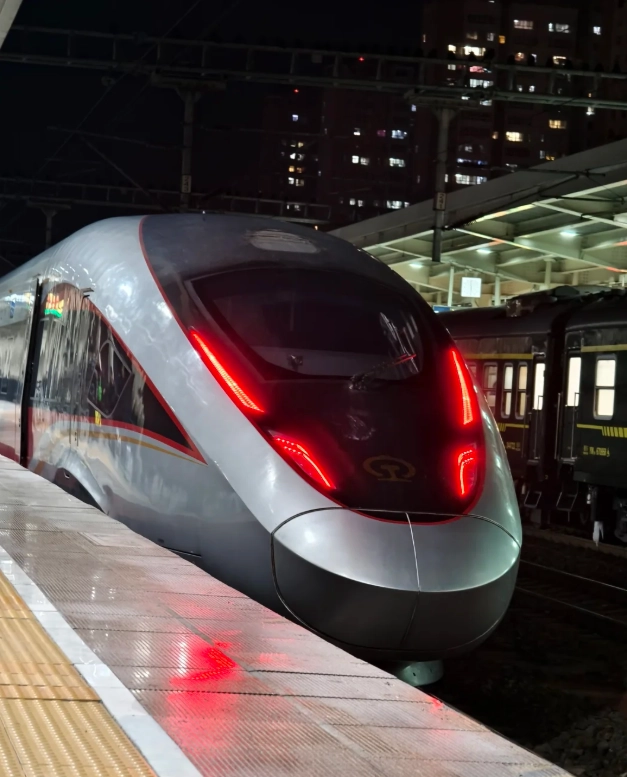
Harbin West Railway Station — Your Default
Roughly nine out of ten high-speed trains toward Jilin City leave from Harbin West — 哈尔滨西站 — on the western edge of the city.
The building is enormous and split across levels. Metro Line 3 stops directly underneath, so you ride escalators up into the departure hall. If you are coming from Central Street by taxi, budget 25 to 40 minutes and somewhere around ¥30 to ¥50 depending on traffic — the river crossings get ugly between 7 and 9 a.m.
Here is a detail that saves real time in winter. The main entrance fills up with tour groups between 8 and 10 a.m., and everyone is wearing a heavy coat, so the security line moves at half speed. The secondary entrance on the north side is usually quieter. I always tell my clients to aim for 45 minutes before departure on their first ride out of this station, and 30 minutes once they know the layout.
Harbin Railway Station — The Convenient Backup
A smaller number of Jilin-bound departures leave from Harbin Station — 哈尔滨站 — right beside the old town and a short walk from Central Street.
If your hotel is near Saint Sophia Cathedral or the Songhua River promenade, check this station first. Metro Line 2 connects it, and a taxi across town to Harbin West will cost you both time and money you did not need to spend.
Harbin East — Do Not Book It By Accident
Harbin East — 哈尔滨东站 — handles regional and commuter services and almost never has a direct Jilin City departure. If your ticket says 哈尔滨东, you have probably bought the wrong train.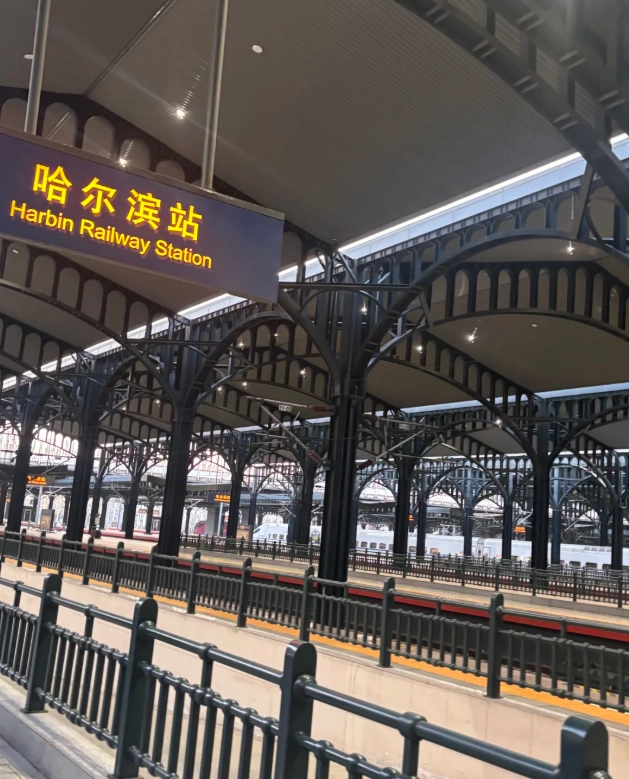
| Station | Chinese Name | Serves Trains to Jilin City? | How to Get There | Watch Out For |
|---|---|---|---|---|
| Harbin West | 哈尔滨西站 | Yes — nearly all G and D trains | Metro Line 3 direct; taxi ¥30–50 from Central Street | Long security queues in winter |
| Harbin Railway Station | 哈尔滨站 | Yes — a few departures daily | Metro Line 2; walkable from Central Street | Easy to confuse with Harbin West |
| Harbin East | 哈尔滨东站 | Rarely — regional services only | Metro Line 1 | Almost never your station |
How Long Does the Harbin to Jilin Train Take?
Most direct high-speed services cover the route in two hours ten minutes to three hours, depending on how many stations the train stops at.
The fastest G trains skip most intermediate stops and land near the two-hour mark. The slower ones crawl through Gongzhuling and a handful of county stations, and you feel every one of them. On the booking screen this shows up as a difference of maybe forty minutes, which matters if you are trying to catch the last daylight at the Songhua River.
| Option | Typical Journey Time | Approx. Second-Class Fare | Departs From | Best For |
|---|---|---|---|---|
| G-series high-speed | 2h 05m – 2h 40m | ¥140 – ¥185 | Harbin West | Most travelers |
| D-series high-speed | 2h 30m – 3h 10m | ¥115 – ¥165 | Harbin West | Budget-conscious riders |
| Transfer at Changchun West | 2h 45m – 4h total | ¥150 – ¥200 | Harbin West | When direct trains sell out |
| Conventional K or T train | 4h 30m – 6h | ¥55 – ¥100 | Harbin Station or Harbin East | Late-night departures |
Fares shift with train type and season, so treat those numbers as a planning range rather than gospel. The official China Railway 12306 booking platform shows the live price before you commit.
Now, about the transfer option. Plenty of itineraries will route you through Changchun West, and honestly, that is not a disaster. The Changchun to Jilin intercity trains run frequently, and the connection inside Changchun West station is straightforward once you find the correct level. What nobody warns you about is that the two legs are sold separately, so if your first train runs late, the second ticket is simply gone. Direct trains exist and they are worth waiting for.
And no, do not fly. There is no practical direct air service for this distance, and by the time you factor in two airport transfers you have burned more hours than the slow train would have cost you.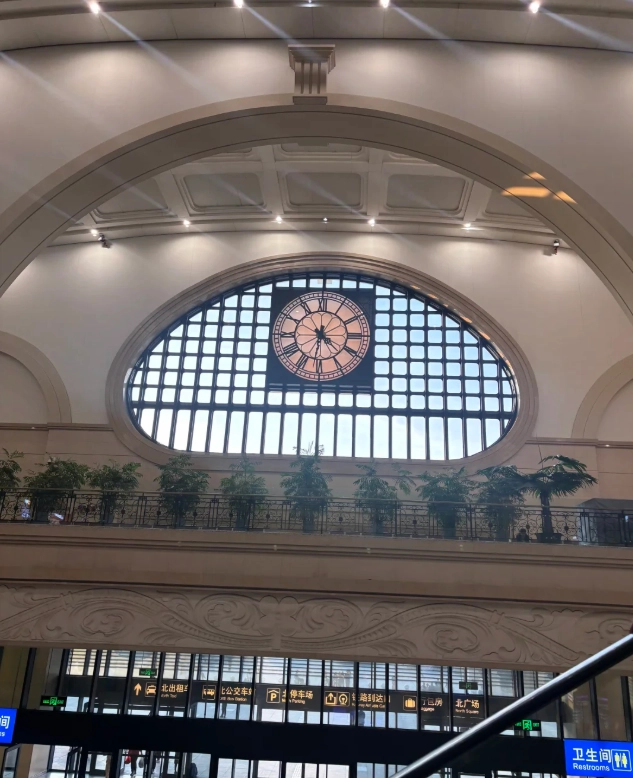
How to Book Tickets as a Foreigner
Booking on 12306 — the Official Channel
12306 is the only place you pay face value, and its English interface works perfectly well in a mobile browser.
Register with your passport number, add yourself as a passenger, and verify the passport details. Tickets typically open for sale around fifteen days before departure, so set a reminder. The mobile app can be fussy with foreign phone numbers during verification — I have had better luck on the desktop site, then switching to the app once the account is live.
Trip.com and Klook — Pay a Little, Skip the Headache
Trip.com adds a small service fee but accepts international cards, shows the full route in English, and refunds cleanly if plans change.
For a two-and-a-half-hour ride costing under ¥200, that fee is usually worth it if your time is tight. You still travel on the same train, in the same seat, with the same passport rule at the gate.
Your Passport Is Your Ticket
Since China moved to fully electronic rail tickets, your passport normally replaces a paper ticket — but the automatic gate scanner is the weak link in that chain.
Scan your passport at the gate as you would a Chinese ID card. If the reader rejects it, do not stand there trying again. Step to the staffed lane on the far left or right of the gate bank, hand over your passport, and the attendant will wave you through. I have seen this happen to maybe one in five foreign passengers, and it adds about ninety seconds when you handle it calmly.
Keep your booking reference number on your phone. If you need to change or refund, that number plus your passport is all the ticket window needs.
Entry rules, visa-free transit eligibility, and visa extension questions are all handled by the National Immigration Administration, and their site is the only source I trust for anything that changes quickly.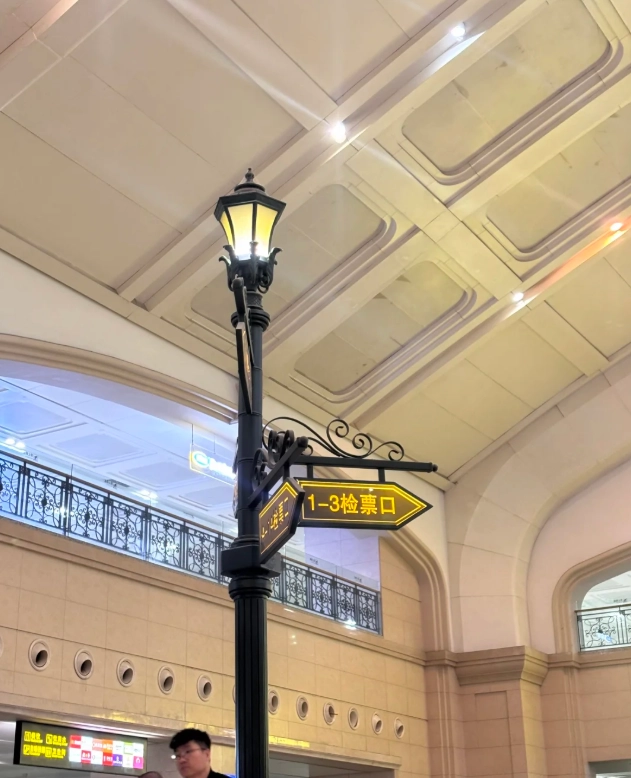
Insider Advice: Load Alipay or WeChat Pay before you arrive. Ticket counters at smaller stations sometimes have a card reader that is out of service, and a queue of forty people behind you is not the moment to discover your Visa does not work. Carry a few hundred yuan in cash as a fallback.
Seat Classes, Ranked Honestly
Second class is all you need on a two-and-a-half-hour ride, and I say that as someone who gets upgraded for free more often than he pays for it.
| Class | Chinese Name | Approx. Price | Seat Layout | My Verdict |
|---|---|---|---|---|
| Second Class | 二等座 | ¥140 – ¥185 | 3 + 2 across | Best value by a wide margin |
| First Class | 一等座 | ¥230 – ¥290 | 2 + 2 across | Worth it if you want quiet |
| Business Class | 商务座 | ¥430 – ¥560 | 1 + 2, wider reclining seats | Overkill for this route |
| Standing | 无座 | Same as Second Class | No assigned seat | Avoid unless it is the last train |
Here is where I disagree with most guides. Business class on this particular line is not the lie-flat pod you get on the Beijing to Shanghai corridor. It is a wider seat with more legroom and a bit of extra service. For a trip you can sleep through in one podcast episode, that is a lot of money for very little.
Two seating details worth knowing before you pick a seat. In second class the windows are A and F. In first class the windows are also A and F, but with only four seats across you get noticeably more shoulder room. If you are traveling with a large suitcase, the overhead rack fits roughly a 24-inch case; anything bigger goes on the luggage stack at the end of the carriage, and you should board early to claim a spot.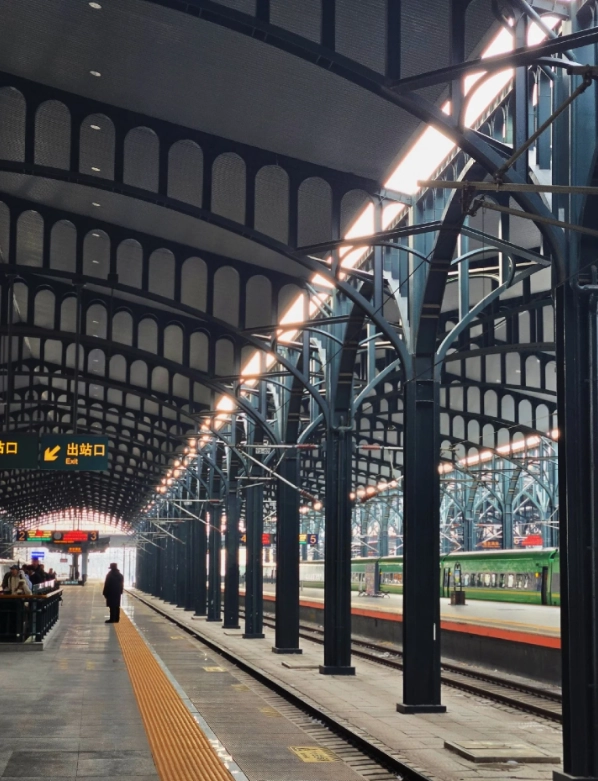
Landing in Jilin City: What Happens Next
Jilin Railway Station sits in Changyi District on the north side of the Songhua River, and the riverfront is a fifteen-minute walk or a short taxi ride away.
The station exits into a plaza with a taxi rank on the left as you come out. Drivers will not use Google Maps, and neither should you — it is unreliable across mainland China. Apple Maps works reasonably well, and AMap, the international version of Gaode, handles English search better than most. Save your destination in Chinese characters before you get in the car so you can simply show the screen.
Useful Chinese addresses to keep on your phone: 吉林站 for the station, 松花江 for the Songhua River, 世纪广场 for Century Square, 北山公园 for Beishan Park, 龙潭山公园 for Longtan Mountain Park, and 雾凇岛 for Wusong Island.
Rime Ice and the Songhua River
The famous rime ice — 雾凇 — forms along the Songhua on cold, clear, windless mornings, usually between late December and mid-February.
It is not a guaranteed show. You need a specific combination of humidity off the river, a hard freeze overnight, and no wind. Local forecasters publish a rime index each evening, and your hotel front desk can check it for you. When conditions are right, you want to be on the water before 7 a.m., because the sun burns the crystals off the branches by mid-morning.
Wusong Island is the postcard location and it is about an hour's drive out of the city, which means a 5:30 a.m. departure in winter dark. If that sounds miserable, the riverside rime corridor inside the city limits gives you a decent second-best without the drive, and far fewer tripods in your shot.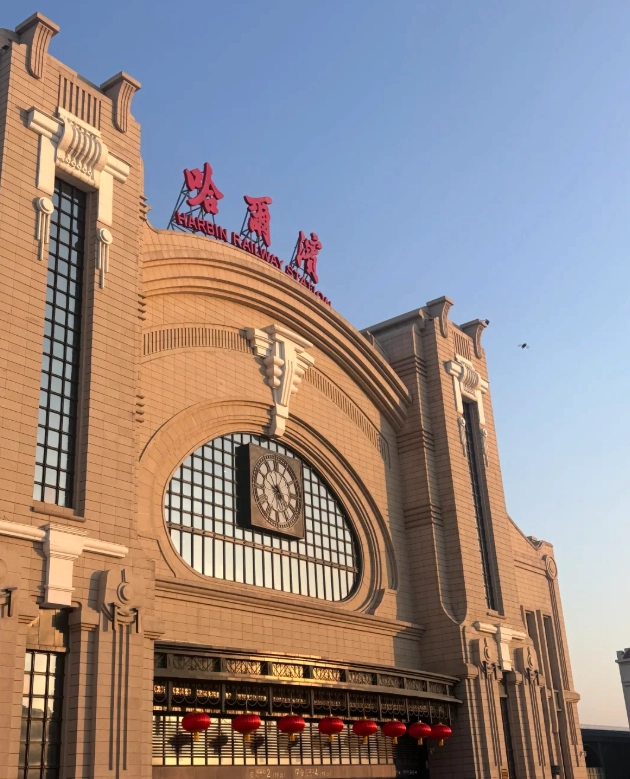
Getting to Beidahu Ski Resort
Beidahu sits roughly 55 kilometers southeast of Jilin City, so plan on one to one and a half hours by road depending on snow conditions.
Winter shuttle buses run between the station area and the resort, and most hotels will arrange a private transfer if you ask the night before. Songhua Lake Resort, closer in at around 25 kilometers, is the easier option for a half-day on the slopes. Both are serious hills — this is not a beginner-friendly bunny slope setup, and rental gear queues on weekend mornings can eat an hour.
A 24-Hour Jilin Plan Built Around the Timetable
Assume you have one day. Here is how I would spend it, with realistic transfer times baked in.
- 06:20 — Depart Harbin West on an early G train. You want to be moving before the tour groups wake up.
- 08:50 — Arrive Jilin Railway Station. Drop your bag at the station left-luggage counter or, better, at your hotel even if check-in is not until afternoon. Most will hold it.
- 09:20 — Taxi to Beishan Park, about 15 minutes and ¥10–15. The temple complex on the hillside takes 60 to 90 minutes at an unhurried pace.
- 11:30 — Walk or ride down to the riverfront and follow the Songhua east toward Century Square. This is the stretch that produces the rime photographs in winter.
- 12:45 — Lunch. Go for Ula Manchu hotpot — a copper pot, pickled cabbage, and thinly sliced pork. Rich, sour, and exactly what you want at minus fifteen degrees.
- 14:30 — Longtan Mountain Park on the east side of the city, or the Catholic Church near the river if the weather has turned. Both are indoor-friendly options when the wind picks up.
- 16:15 — Coffee and a warm-up. Jiefang Road has a cluster of small cafes that stay open through the afternoon.
- 18:00 — Dinner, then either an evening train back to Harbin or a night in the city if you are chasing rime ice the next morning.
Bad-weather Plan B: If it is snowing hard or the temperature drops below minus twenty-five, scrap the outdoor half of this plan. The Jilin City Museum and the Confucian Temple are both indoors, and the riverside cafes along Songjiang Road will happily let you sit for three hours with one order of tea.
And if rime ice is your entire reason for coming? Flip the plan. Take the earliest train, go straight from the station to Wusong Island, and skip the city center completely. You can see Beishan Park on the way back.
Mistakes I See on This Route Every Winter
- Booking to the wrong Jilin. Double-check that your arrival station reads 吉林 and not 长春 or 蛟河西.
- Assuming one Harbin station. Harbin West, Harbin Station, and Harbin East are three separate places, and the taxi ride between them is not short.
- Trusting Google Maps for the last kilometer. It will put you on the wrong side of a divided road in a city where the taxi driver cannot read the English name anyway.
- Misreading the 24-hour clock. Chinese rail timetables run 00:00 to 23:59 with no a.m. or p.m. A 00:35 departure is the middle of the night, not the afternoon. I have watched a family miss a train over this exact mistake.
- Arriving twenty minutes early in January. Security, coat removal, and platform walks take longer when everyone is in a parka. Give yourself forty-five minutes at Harbin West.
- Buying a standing ticket to save money. On a two-and-a-half-hour ride through a northeast winter, that is a genuinely bad trade.
One more thing, and it is the least glamorous advice in this guide. Screenshot everything. Your booking, your hotel address in Chinese, the station name in characters. Mobile data in a frozen railway plaza is not something you want to depend on.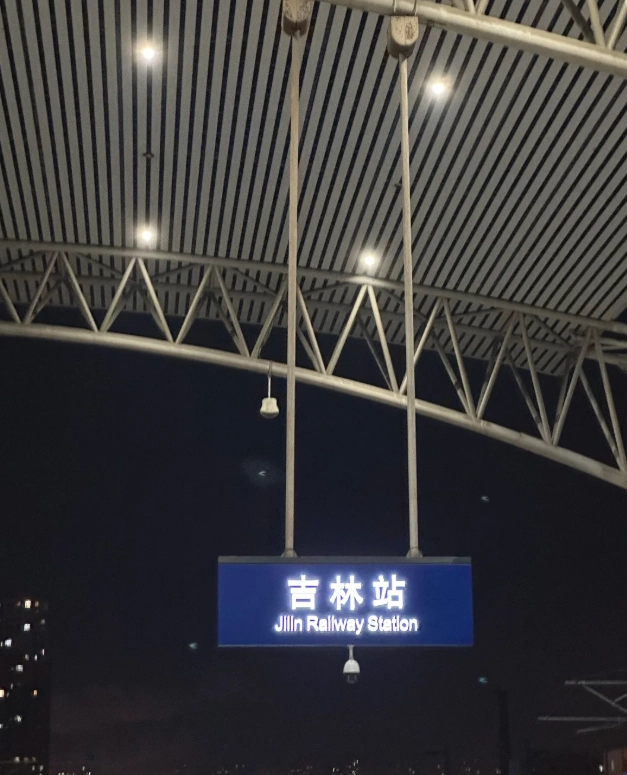
Harbin to Jilin Train FAQ
Can I board the Harbin to Jilin train with only my passport?
In most cases your passport is the ticket, and you simply scan it at the gate. The catch is that older passport readers reject some documents, particularly ones with worn photo pages. If the machine flashes red, walk to the staffed lane at the end of the gate bank and show the attendant your booking reference. Do not queue up again at the ticket office — that is a twenty-minute detour you do not need. For a first ride on this route, arrive forty-five minutes before departure and you will never be rushed.
Is it cheaper to book the Harbin to Jilin train on 12306 or Trip.com?
12306 is always cheaper because you pay the face value with no markup. Whether that saving matters is a different question. The gap on this route is small, and Trip.com accepts international cards without the verification headaches that sometimes come with a new 12306 account. If you are booking two days out and your Chinese is limited, pay the small fee and move on with your trip. If you are planning a longer rail loop through northeast China, it is worth setting up 12306 properly once.
Do I have to change trains in Changchun to get from Harbin to Jilin City?
Direct trains exist and they are the better choice, but they are not as frequent as you might expect, and they sell out first on winter weekends. When the app shows a transfer, look at where the change happens. Changchun West is the smoother connection because the Jilin-bound intercity services run frequently and the station is easy to navigate. The risk with any transfer is that the two legs are separate tickets — if the first train is late, the second one leaves without you and you buy a new fare.
What happens if I miss my Harbin to Jilin train?
Go straight to the ticket office inside the station rather than the departure gate, and bring your passport. Chinese rail rules generally allow a change to a later train on the same day if seats are available, and the staff at Harbin West handle this constantly. What you cannot do is show up after departure and expect a refund. Miss the last train of the day and you are looking at a hotel in Harbin and a fresh ticket in the morning — which is exactly why I never book the final departure of the night when there is weather around.
Should I day-trip Jilin City from Harbin, or stay overnight?
Stay overnight if you are here between late December and mid-February. Rime ice only forms on specific cold, still mornings, and it is gone by mid-morning. A day trip forces you to arrive after the best light and leave before the next window. Outside rime season, a day trip is perfectly reasonable — the train ride is short enough that you can leave Harbin at seven and be back by nine. Just do not attempt the round trip on the same day you are also catching a flight out of Harbin.
Is the bus a better option than the Harbin to Jilin train?
It is not, and I would push back hard on anyone suggesting otherwise for this route. The bus takes longer, runs on a schedule that is far less predictable in snow, and drops you at a terminal where you will need another taxi. The train gives you a fixed departure time, a warm carriage, and a station close to the river. The only scenario where the bus makes sense is when every single train is sold out during Spring Festival travel, and even then I would look at a Changchun transfer first.
If you want a broader read on what winter travel in this part of the country actually looks like, CNN Travel has covered the Harbin ice season more than once, and their reporting lines up with what I see on the ground every January.
Verified and fact-checked by the editorial team. Fares, timetables, and ticket policies on Chinese railways change without long notice — confirm your specific train on the official 12306 platform before you travel.


No comments yet.