 Fang Wang
📖 What's Inside
- What Exactly Is the 240-Hour Visa-Free Policy?
- Who Qualifies (and Who Doesn't)
- How to Activate It at the Airport
- Top Cities You Can Visit Under This Policy
- Practical Tips for a Smooth Transit (Payment, VPN, Navigation)
- My Favorite 10-Day Itinerary in Shanghai
- Common Mistakes and How to Avoid Them
- Frequently Asked Questions
I still remember the first time I saw a group of confused tourists at Pudong Airport, clutching their boarding passes and looking lost. They had a 240-hour window to explore China, but no clue how to use it. That's why I'm writing this — to save you from that deer-in-headlights moment.
What Exactly Is the 240-Hour Visa-Free Policy?
In simple terms: you fly from Country A to a participating Chinese city, stay for up to 240 hours (10 days), then fly out to Country C. You cannot return to Country A directly — that would break the transit rule. The policy was expanded in 2024 to include more entry points and a longer duration than the old 144-hour limit.
Officially called the "240-Hour Visa-Free Transit Policy" (or "Shanghai 240-hour visa-free" since Shanghai was the first major adopter), it's a game-changer for layover travelers who want to see a slice of China without the visa paperwork. But note: you must enter and exit through one of the designated ports in the same region (like Shanghai, Jiangsu, and Zhejiang for the Yangtze River Delta cluster).
Who Qualifies (and Who Doesn't)
The list of eligible nationalities is long — US, UK, Canada, Australia, most EU countries, Japan, South Korea, and more. Check the official National Immigration Administration site for the full list (look for the 240-hour transit policy page).
But here's the catch I always tell my clients: even if your passport qualifies, you must have a confirmed onward ticket to a third country (not your origin) within 240 hours. And you can't just hop to Hong Kong or Macau and back — those are considered separate territories, but the policy treats them as third destinations (that actually works in your favor: you can go to Hong Kong and then fly home, but you must leave mainland China).
Also crucial: you need a visa for your next destination if required. For example, if you're flying from the US to Shanghai and then to Japan, you'd better have a Japanese visa (unless you're from a visa-exempt country for Japan).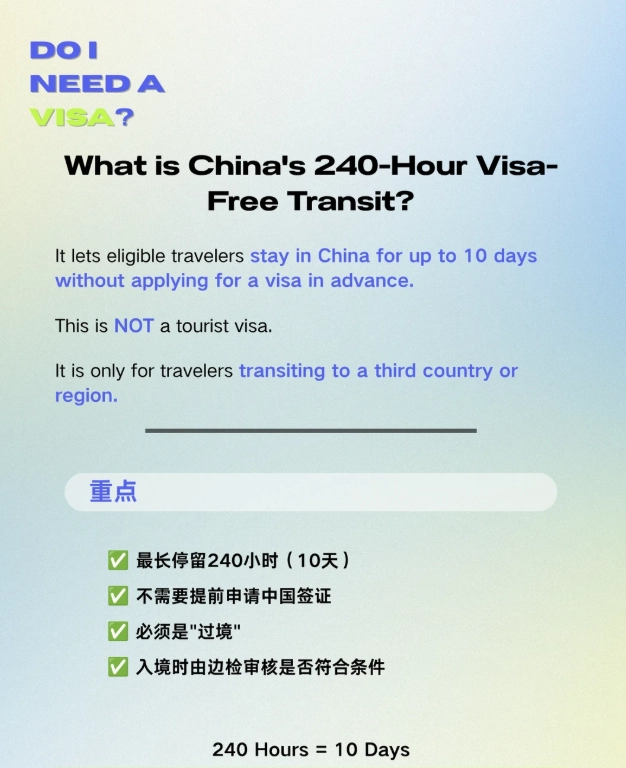
How to Activate It at the Airport
Here's the step-by-step, from my own experience:
- Don't go to the regular immigration counters. Look for the "24/144/240-Hour Visa-Free Transit" or "Transit Without Visa" sign. It's usually near the transit area before passport control. In Shanghai Pudong (PVG), it's on the second floor after you get off the plane — follow the purple signs.
- Fill out the arrival card (they'll give you a special blue form). Mark "Transit" and write your onward flight number and destination.
- Present your passport, onward ticket, and hotel booking (if you have one). They may ask for proof of accommodation for the entire stay — I always recommend having at least the first night booked.
- They'll stamp you in with a special transit stamp that says the allowed exit date (count 240 hours from the next day you arrive). For example, if you land at 10 PM on Monday, your 240 hours start Tuesday at 00:00 and end on Thursday of the following week. You must depart by midnight of that last day.
Top Cities You Can Visit Under This Policy
The policy covers specific regions. You can freely travel within the region. For example:
- Shanghai (Pudong & Hongqiao airports) + Jiangsu & Zhejiang provinces: You can go to Hangzhou, Suzhou, Nanjing, etc. This is the most popular cluster.
- Beijing (Capital & Daxing airports) + Tianjin & Hebei: Explore Beijing and nearby areas like Chengde.
- Guangdong Province (Guangzhou, Shenzhen, etc.): You can fly into Guangzhou and travel within Guangdong.
- Chengdu, Xi'an, Kunming, and others have their own limited zones. Check the latest list at the Chinese embassy website.
Important: You cannot leave the designated region. If you fly into Shanghai, you can't suddenly take a train to Beijing — you'd be violating the policy. Stick within the province cluster.
Practical Tips for a Smooth Transit (Payment, VPN, Navigation)
Alright, let's get real. Here's what you absolutely need to know before you step off that plane:
Payment: Alipay and WeChat Pay
Cash is rarely accepted in major cities. Set up Alipay before you arrive — link your international Visa/Mastercard to it. Alipay's Tour Pass (now integrated) lets you top up with a foreign card. WeChat Pay is similar but requires a Chinese bank account for full functionality; Alipay is easier for tourists. I tell everyone: don't rely on cash or credit cards. Even the ticket counter at the Bund Observation Deck only takes mobile payment or cash (but cash gives change in RMB, so you'll end up with coins).
VPN: You'll Need It
Google, Facebook, Instagram, WhatsApp — all blocked. Install a reliable VPN before you leave home. I use ExpressVPN or NordVPN; they work well. Without it, you can't access Google Maps (which I'll cover next) or your email. Don't assume your hotel Wi-Fi bypasses the firewall — many don't.
Navigation: Apple Maps Over Google Maps
Google Maps is unreliable in China. Use Apple Maps (it uses local data) or Baidu Maps (Chinese only). I always switch to Apple Maps before my trip. For public transit, MetroMan (app) is great for subway routes in Chinese cities. Taxi drivers won't understand English addresses, so always have the Chinese name and address ready on your phone. Example: for the Bund, show them "外滩" (Wài TÄn).
Booking Attractions
Major sights like the Shanghai Museum or the Great Wall require advance booking with passport numbers. Avoid WeChat mini-programs — they're in Chinese and complicated. Instead, use Trip.com or Klook; they accept international cards and show English options. For example, Trip.com has a dedicated "Shanghai Museum" ticket page with passport input.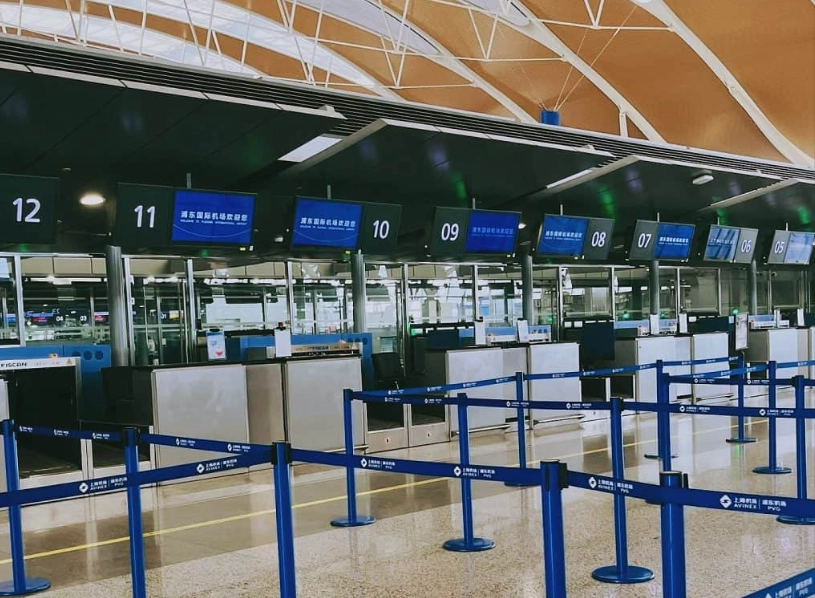
My Favorite 10-Day Itinerary in Shanghai
Assuming you land at PVG at 10 AM on Day 1, here's how I'd spend 10 days without wasting a minute:
Day 1: Arrival & Settle In
After clearing immigration (expect 30–60 mins), take the Maglev train to Longyang Road station (7 mins, 50 RMB). It's fast and a cool experience. Check into your hotel near People's Square — I recommend JW Marriott Shanghai (399 Nanjing West Road; +86 21 5359 4969; around 1200 RMB/night). Great location, stable Wi-Fi, and front desk speaks English. Evening: walk to Nanjing Road Pedestrian Street for a first taste of Shanghai's neon lights. Grab dinner at Din Tai Fung in the nearby Raffles City (3F, 268 Xizang Middle Road) — their xiaolongbao are legendary. Budget: 150 RMB per person.
Day 2: The Bund & Old City
Morning: Walk the Bund (1.5 km, free). Best photo spot is near the Monument to the People's Heroes (east end). Avoid 10 AM–2 PM when tourist groups flood in; go at 7 AM for empty views. Then head to Yu Garden (218 Anren Street; adult 40 RMB, book on Trip.com). It's a classic Suzhou-style garden but gets packed by 11 AM. I prefer to skip the garden and explore the surrounding Yuyuan Bazaar (free) — it's more fun. Lunch: Nanxiang Steamed Bun Restaurant (85 Yuyuan Road; +86 21 6355 4200). They're famous for soup dumplings. Afternoon: Visit the Shanghai Museum (free, but reserve via Trip.com; allow 2 hrs). It's world-class and air-conditioned — a great escape from heat. Evening: Huangpu River cruise (book on Klook, around 180 RMB). The night skyline is breathtaking.
Adjust for weather: If it rains, swap the cruise for the Shanghai Tower observation deck (118F, 180 RMB, book online).
Day 3–4: Suzhou Day Trip
Take a high-speed train from Shanghai Hongqiao Station to Suzhou (30 mins, ~40 RMB). The station has English signs. Spend two days exploring the classical gardens (Humble Administrator's Garden, 80 RMB; Lingering Garden, 55 RMB; both book on Trip.com). Stay overnight at Pingjiang Lodge (33 Pingjiang Road; ~600 RMB/night) — a boutique hotel in the historic canal district. The front desk helped me scan QR codes for local restaurant menus. Don't miss Suzhou Museum (free, reserve days ahead).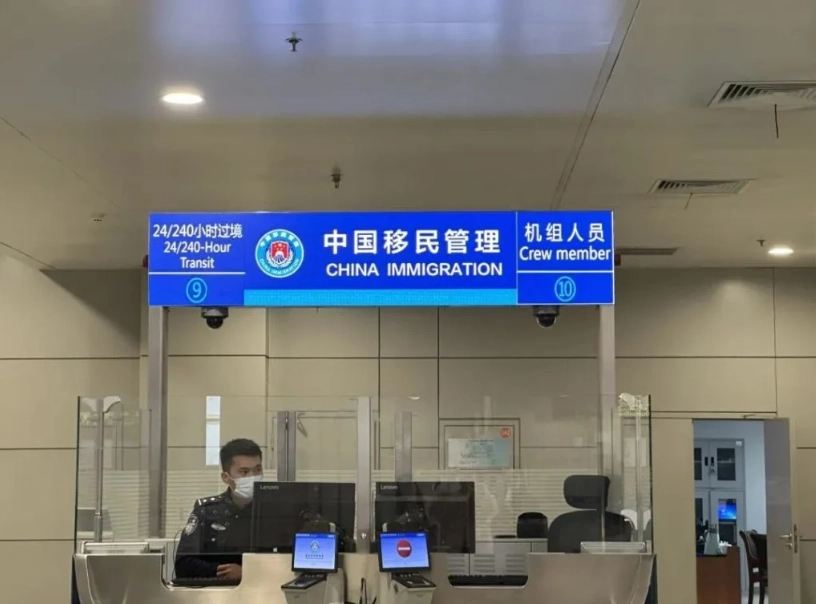
Day 5–6: Hangzhou
Train from Suzhou to Hangzhou (1 hr 40 mins, ~120 RMB). Check into Four Seasons Hotel Hangzhou at West Lake (5 Lingyin Road; ~2000 RMB/night). Yes, it's expensive, but the location on West Lake is unbeatable. Cycle around the lake (bike rental 20 RMB/hour). Visit Lingyin Temple (45 RMB, but the surrounding bamboo groves are free). For dinner, Lou Wai Lou (30 Gushan Road; +86 571 8796 9688) serves authentic Dongpo pork. Book a table — the wait can be 1 hour.
Day 7–9: Back to Shanghai — Explore French Concession & Disney
Train back to Shanghai (1 hr). Stay in the French Concession area; I like Hotel Indigo Shanghai on the Bund (585 Zhongshan East 2nd Road; ~1500 RMB/night). Days 7–8: Wander the tree-lined streets of the French Concession (Fuxing Park, Tianzifang). Visit the Propaganda Poster Art Centre (free, donation). Day 9: Shanghai Disneyland (399 RMB weekday, book on Trip.com). It's smaller than Tokyo but has the TRON ride. Avoid weekends. Use the single rider line if alone.
Day 10: Departure
Your flight must leave within 240 hours. I always schedule a late evening flight to maximize the last day. Spend the morning at the Long Museum West Bund (210 RMB, 3398 Longteng Avenue; modern art). Then head to PVG airport 3 hours early (allow 1+ hour for security and exit procedures). The transit exit is same as regular departure — show your passport with the transit stamp.
Common Mistakes and How to Avoid Them
I've seen travelers mess up the 240-hour visa-free entry more times than I can count. Here are the top blunders:
- Mistaking the start time. The 240 hours begin the day after arrival (00:00). If you land at 6 PM Monday, you have until the end of Thursday next week. But don't cut it too close — if your flight departs at 11:50 PM on that Thursday, you're fine, but if it's midnight Friday, you're overstaying. Always leave a buffer.
- Not having a printed itinerary. Some airlines at check-in may require proof of onward ticket and accommodation. Print the confirmations or save PDFs offline (since internet is blocked). I carry a small folder with copies.
- Using Google Maps offline. Offline maps won't have real-time transit updates. Download Apple Maps offline area for Shanghai or use Maps.me with China map downloaded beforehand.
- Assuming credit cards work everywhere. They don't. Even major hotels often only take UnionPay or mobile payment. At the Bund's historic Peace Hotel, I witnessed a guest trying to pay with Amex — no luck. Always have backup cash (RMB) from the airport ATM (HSBC ATMs accept foreign cards).
Frequently Asked Questions
Verified and fact-checked by the editorial team.

No comments yet.